
 English
 عربى
 русский
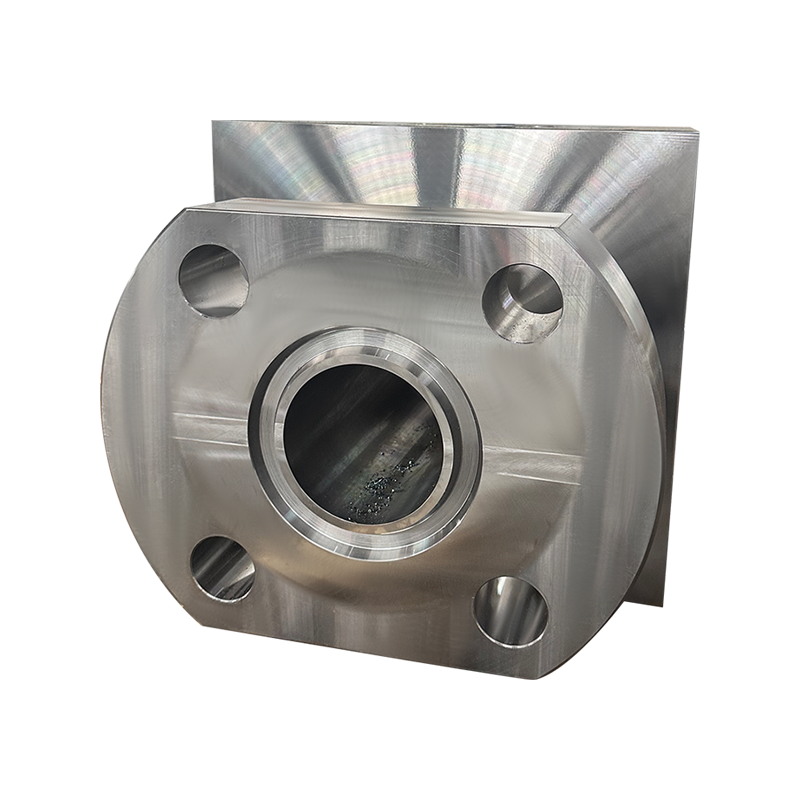
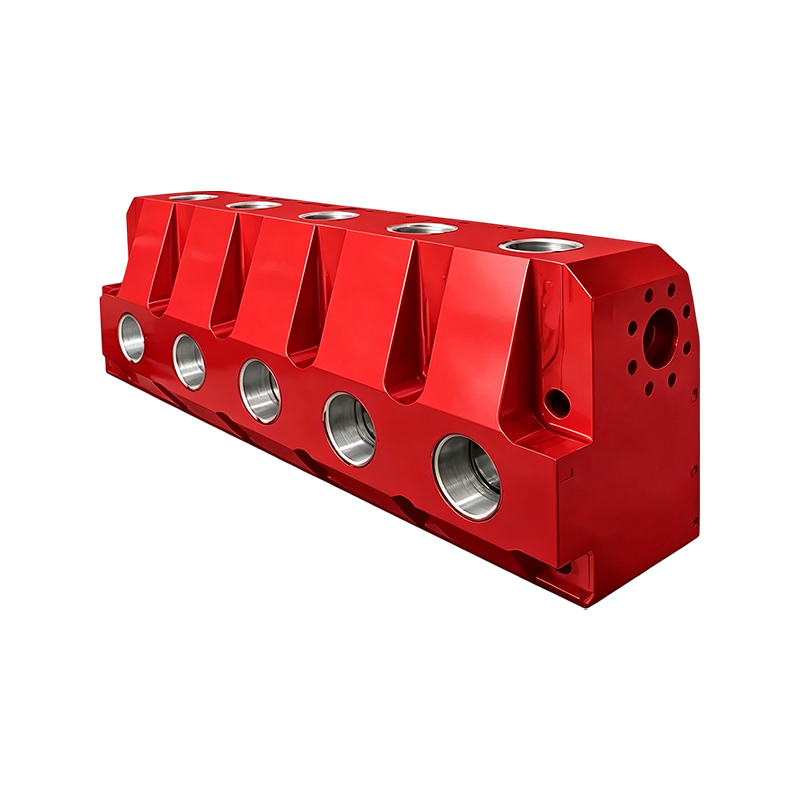
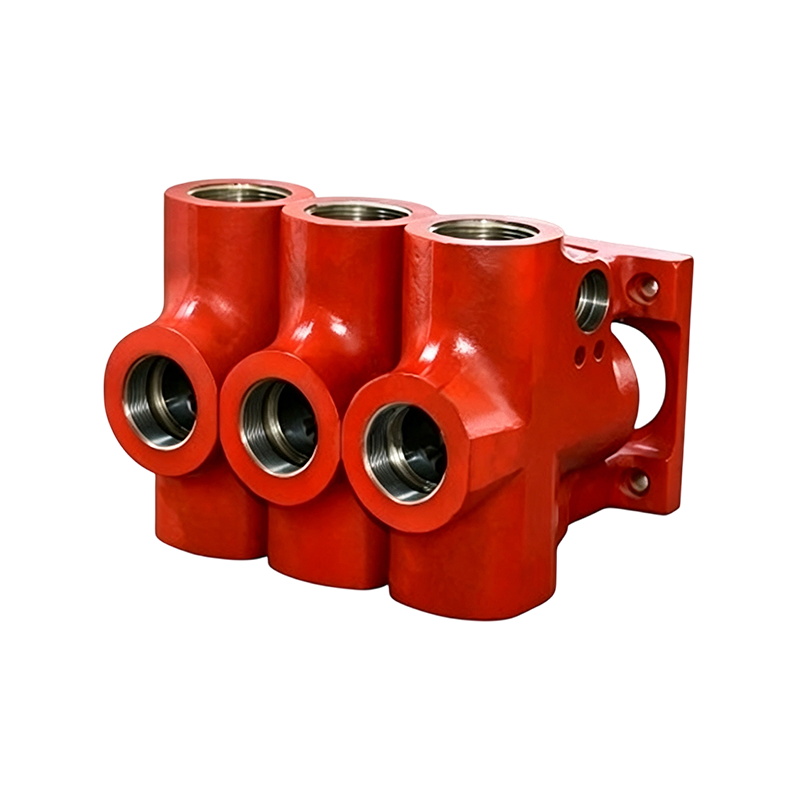
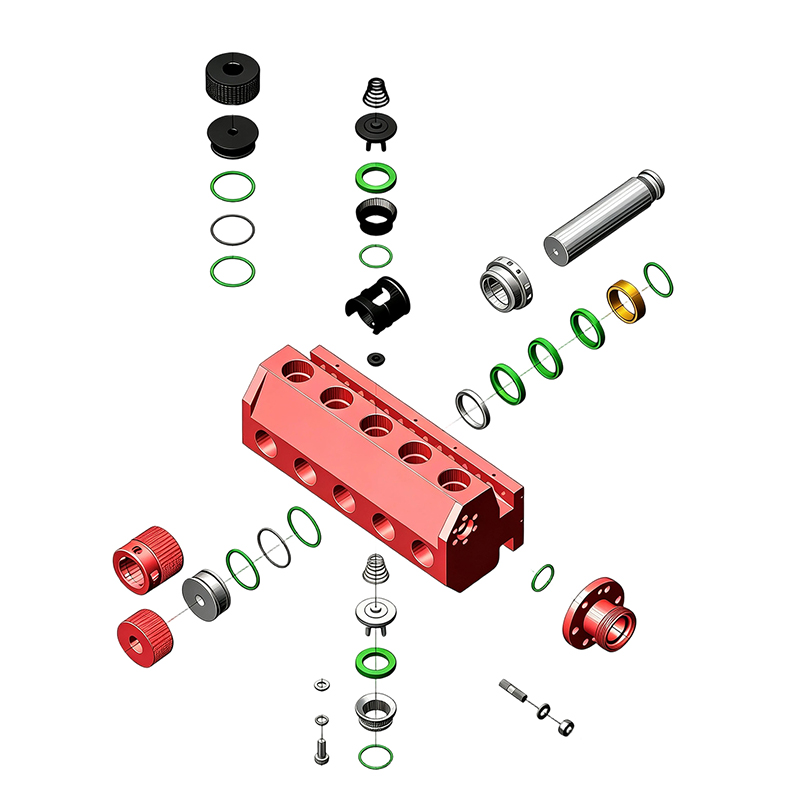
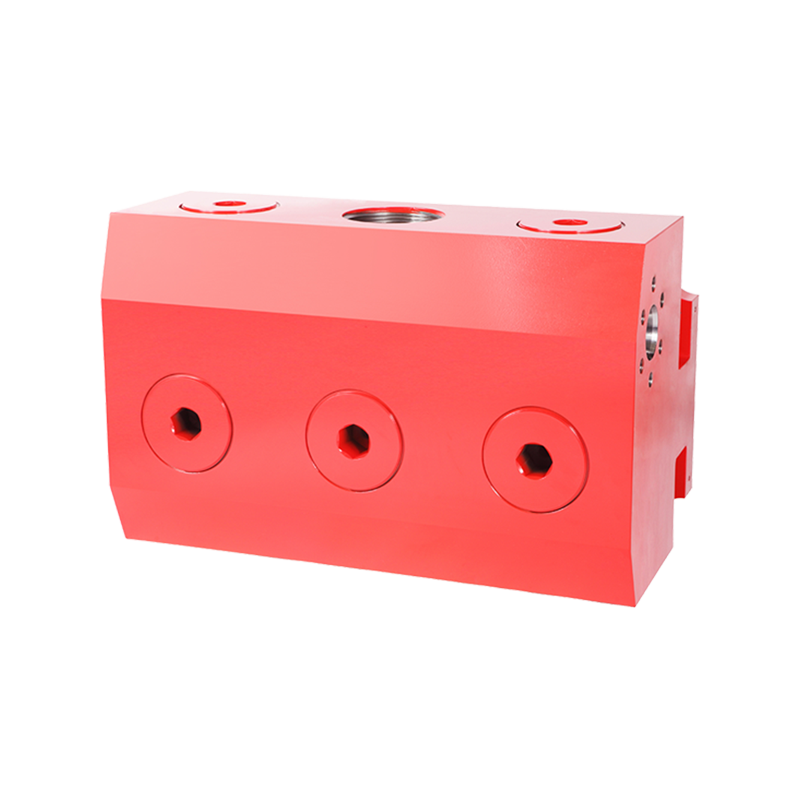
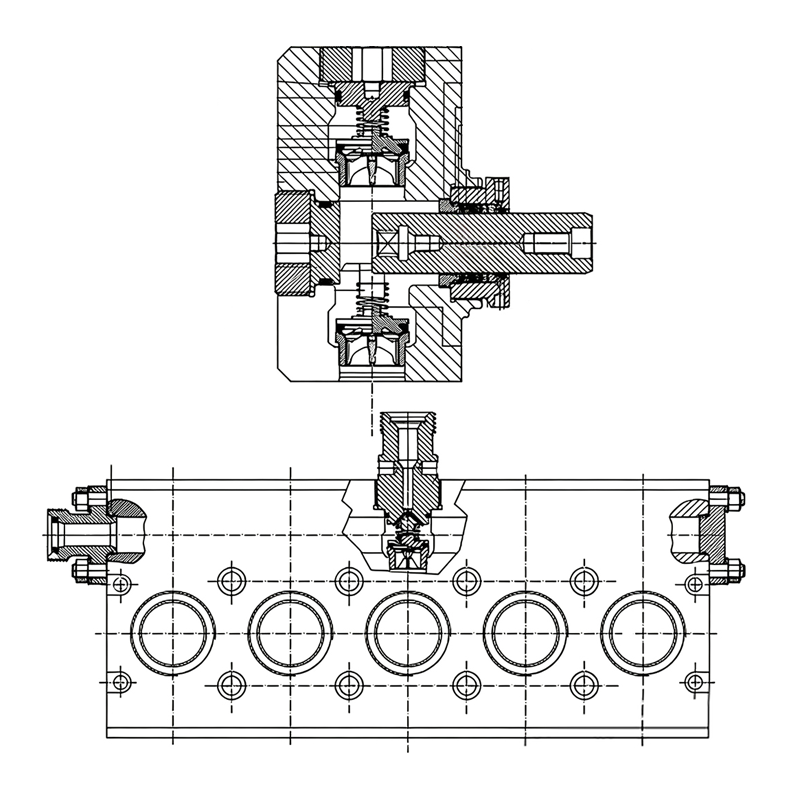
A pump that is down costs more than any part inside it. That is the reality behind most conversations we have with drilling, cementing and well service crews. Custom oilfield machinery components exi...
READ MOREProfessional Oilfield Equipment Parts Supplier: Fluid End & Power End Sourcing
Content
- 1 What Makes an Oilfield Equipment Parts Supplier Professional
- 2 Fluid End Sourcing: Pressure Class, Plunger Size, and Block Material
- 3 Power End Sourcing: Wear Parts That Set the Rebuild Interval
- 4 Manifold and Flow Control Spares: Where Ratings Get Lost
- 5 Standard Interchange Parts Versus Custom Assemblies
- 6 A Five-Step Procurement Checklist for Pump-Down Situations
- 7 Sourcing Questions That Decide the Order
A FIG 1502 hammer union carries a 15,000 psi (103.4 MPa) working pressure rating and a FIG 602 elbow carries 6,000 psi (41.4 MPa). On a pipe rack the two look close enough that a crew can make them up into the same manifold train, and no maintenance schedule recovers from that mistake once the pumps reach treating pressure.
Choosing a professional oilfield equipment parts supplier comes down to four questions that can be answered with documents rather than opinions: does the part carry the correct pressure class, does it fit the installed pump dimensionally, can the supplier prove the material grade, and will it reach location before standby cost overtakes the price of the part.
What Makes an Oilfield Equipment Parts Supplier Professional
A professional oilfield equipment parts supplier manufactures or stocks dimensionally interchangeable replacements for reciprocating pumps and high-pressure manifold systems, and documents the pressure rating, material grade, and inspection standard for every item it ships.
That definition separates two different businesses. A distributor moves boxes. A supplier that belongs on a pump-down shortlist answers three questions in writing inside one working day.
- Dimensional interchangeability. A replacement fluid end, valve, seat, or elbow installs into the existing assembly without field machining, welding, or adapter spools.
- Pressure class conformance. FIG 602, FIG 1002, and FIG 1502 fittings are not interchangeable, and the lowest-rated component in a manifold train sets the rating for the entire train.
- Traceable documentation. Blocks ship with heat-number traceability, valves and seats ship with material certificates, and sour service items ship with a NACE MR0175 / ISO 15156 statement when hydrogen sulfide partial pressure exceeds 0.05 psi (0.34 kPa).
The working definition: a quote from a qualified supplier names the pressure class, the material grade, and the inspection standard before it names the price.
20acre manufacturing base
50-99employees
$85.7Mannual output value
$34.2Mannual export value
Capacity figures published by Anhui Exwell New Energy Technology Co., Ltd., a petroleum industry spare parts manufacturer with a 20-acre base in Wuhu, Anhui and international sales and purchasing operations in Xuancheng. The company supplies fluid end, power end, mud pump, and manifold spares to domestic and overseas oil and gas firms.
Fluid End Sourcing: Pressure Class, Plunger Size, and Block Material
A fluid end is selected on three parameters: the rated working pressure of the pump, the plunger diameter, and the block material specified for the service fluid.
Fluid ends fail in two ways. Proppant-laden fluid erodes the valve and seat interface, which appears first as declining volumetric efficiency. Cyclic pressure then opens fatigue cracks at the internal corners of the block, and those give no warning at all. The first failure mode can be scheduled; the second one ends the job.
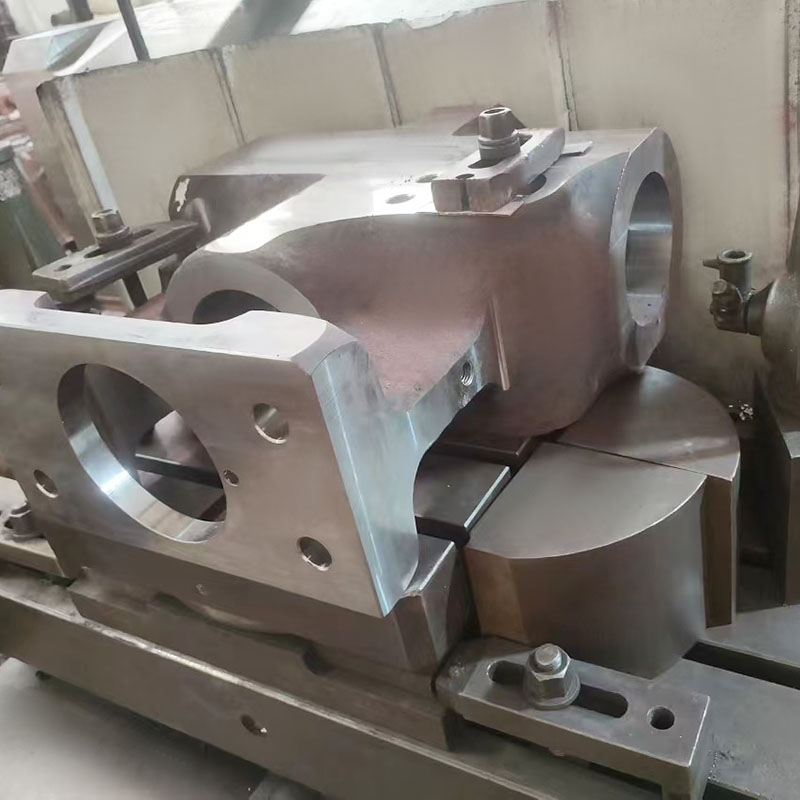 Triplex Plunger Pump HT400 Spare Parts for Oilfield Cementing EquipmentProduct Overview The HT400 Fluid End Assembly is a critical high-pressure component designed for triplex plunger pumps used in demanding oilfield services. Engineered ...View Product →
Duty cycle decides which block fits. Cementing work running HT400-class triplex hardware sees abrasive slurry in short, intense intervals. An offset plunger pump built for acidizing and fracturing, such as the TWS600S, handles corrosive fluid and needs a different elastomer and trim package. Deep-well injection on a TWS2250-class triplex block runs high pressure continuously, which moves the wear to the plunger and packing. A quintuplex block such as the QWS2500 spreads the same flow across five cylinders, lowering peak pressure per plunger and extending valve life at the cost of a larger footprint.
| Pump family | Primary duty | Fluid end wear focus | Power end wear focus |
| HT400 triplex | Cementing | Valve and seat erosion from cement slurry | Crankshaft and crosshead wear parts |
| QWS1000 quintuplex | Hydraulic fracturing | Valve, seat, and packing under high pressure | Wear components on the power end |
| QWS2500 quintuplex | Well service and fracturing | Heavy-duty block erosion | Heavy-duty power end assembly |
| TWS2250 triplex | Deep-well injection and stimulation | Plunger and packing wear, continuous load | Injection-rated power end |
| TWS600S triplex | Acidizing and fracturing | Corrosion of trim and elastomers | Compact triplex power end |
| JWS-400 triplex | Drilling mud and well service | Fluid end housing and assembly wear | Pump housing and assembly |
Order valves, seats, and packing as a matched set. Mixing a new seat with a worn valve shortens the next run and destroys the wear record that would have justified a planned change.
Replacement intervals for valves, seats, and packing are covered in more detail in the guide to fluid end maintenance and replacement parts.
Power End Sourcing: Wear Parts That Set the Rebuild Interval
Power end wear parts, including bearings, crossheads, connecting rods, and crankshaft components, determine when a pump leaves service for rebuild, and they must be matched to the same pump model and duty profile as the fluid end.
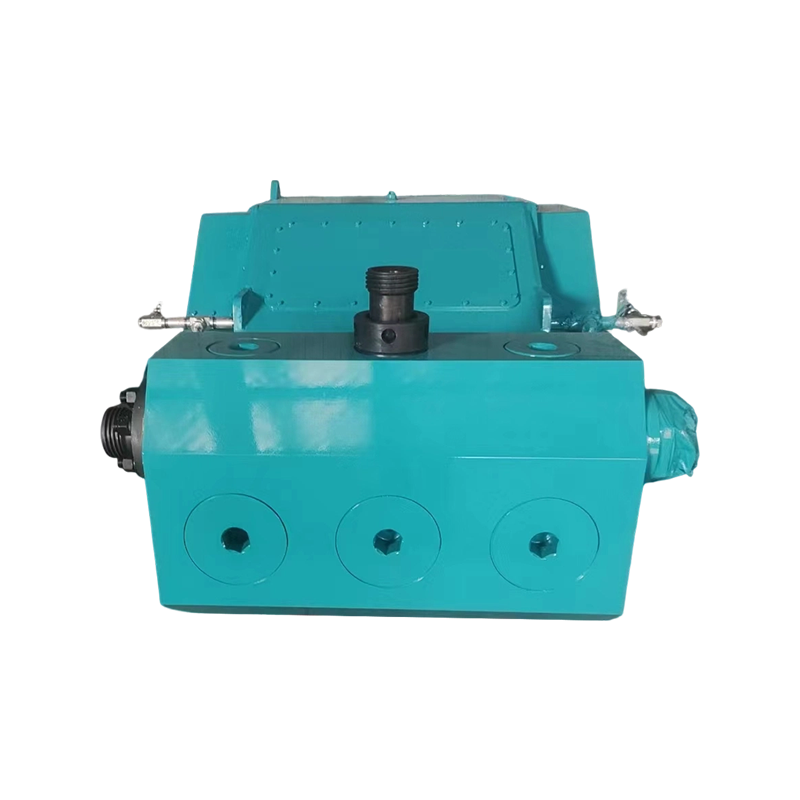 TWS2250 Robust‑Design Deep‑Well Triplex High‑Pressure Injection PumpProduct Overview The TWS2250 Triplex Pump is a heavy‑duty high‑pressure three‑plunger pump for oilfield fracturing. It features an 8‑inch stroke with a gear ratio of 6...View Product →
A well service pump such as the TWS600S and a deep-well injection pump such as the TWS2250 share the triplex layout but not the load profile. The injection unit runs high pressure continuously, so crosshead and bearing clearances close faster than on an intermittent well service unit. Heavy-duty quintuplex units in fracturing service load the crankshaft differently again, because five cylinders fire per revolution instead of three and the torque ripple drops while power density rises.
Wear crosses between the two assemblies. Eroded valves raise discharge temperature and extend cycle time, and the power end absorbs that extra load long before clearance loss becomes audible.
Buying the fluid end and the power end for one pump from a single source keeps the wear record in one place, and that record is what turns a rebuild interval from a discovery into a schedule.
Manifold and Flow Control Spares: Where Ratings Get Lost
FIG 602, FIG 1002, and FIG 1502 hammer unions are rated at 6,000 psi (41.4 MPa), 10,000 psi (69.0 MPa), and 15,000 psi (103.4 MPa), and mixing them inside one manifold train derates the whole train to the lowest rating present.
FIG 602
41.4 MPa
FIG 1002
69.0 MPa
FIG 1502
103.4 MPa
Working pressure ratings by hammer union figure, converted from the 6,000 psi, 10,000 psi, and 15,000 psi service classes.
The same logic runs through every fitting downstream of the pump, because a manifold is only as strong as its weakest joint:
- Long-radius 90-degree elbows, integral L-type and Y-type fittings, and side laterals from 2 in to 4 in across the 602, 1002, and 1502 service classes.
- Integral T, Y, and cross fittings for flow splitting and direction change on heavy-duty pipeline headers.
- Plug valves, throttle valves, and single-flow check valves for isolation and flow control on drilling and production lines.
- Swivel joints with repair kits, so the rotating seal is rebuilt without scrapping the body.
- Hammer union crossovers, pup joints, and adjustable short conversion joints for making up mismatched connection sizes.
- Safety relief valves for industrial boiler and pressure protection duty.
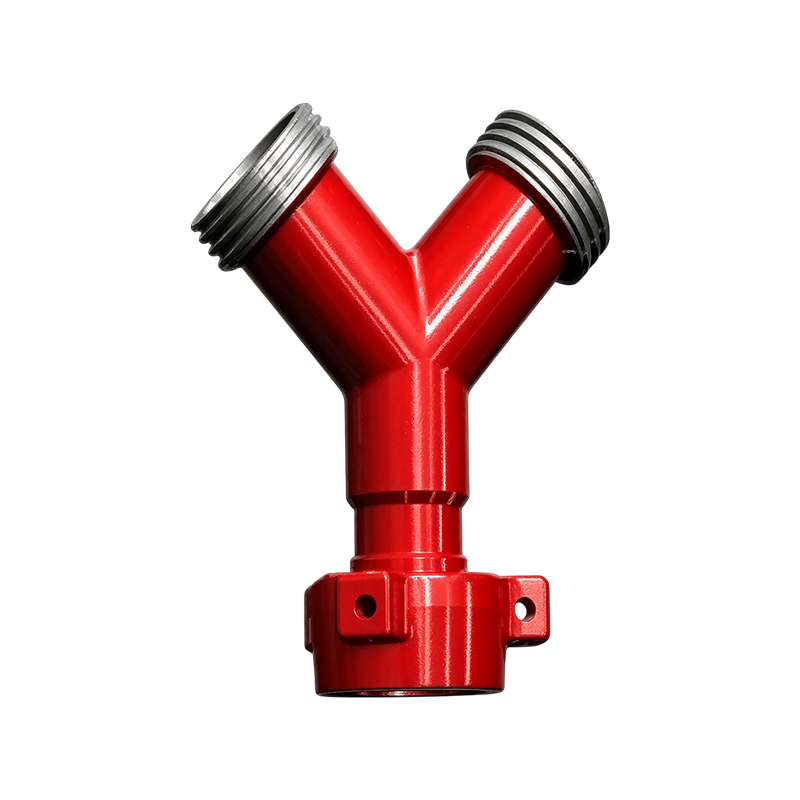 FIG 602/1002/1502 High-Pressure Integral Y-Shaped Manifold JointWorking pressure: 42MPa-105MPa(6000psi–15000psi)View Product →
Suppliers list long-radius bend and elbow ranges from 42 MPa (6,091 psi) to 105 MPa (15,229 psi), which maps onto the 6,000 psi to 15,000 psi service classes. A 105 MPa fitting installed next to a 42 MPa fitting produces a manifold rated at 42 MPa, no matter what the tag on the high-pressure end says.
Standard Interchange Parts Versus Custom Assemblies
The choice between a standard interchange part and a custom assembly is decided by one variable: whether the pump is a current model with published dimensions or a legacy unit whose block drawing is no longer available.
Standard interchange parts
- Dimensions taken from a published pump model
- Fixed part number and repeatable lead time
- Fits scheduled maintenance and stocked spares
- Documentation: material certificate plus dimensional inspection record
Custom-built assemblies
- Built to a customer drawing or reverse-engineered from a removed block
- Fluid end assemblies configured for a stated pressure and service fluid
- Fits legacy pumps, non-standard manifold layouts, and sour service upgrades
- Documentation: drawing approval before machining, final inspection after
Custom work carries one extra risk and one extra control. The risk is a dimensional error that only shows up at the wellsite. The control is a drawing approval step before any material is cut. Suppliers that build custom fluid end assemblies confirm interface dimensions in writing first, which moves the error from the location to the drawing office.
A Five-Step Procurement Checklist for Pump-Down Situations
A five-step checklist covering pressure class, connection type, material grade, documentation, and delivery commitment decides whether a replacement part goes into service or back into a crate.
- Confirm the pressure class of the assembly, not the part. A manifold treating at 12,000 psi (82.7 MPa) requires 15,000 psi (103.4 MPa) FIG 1502 hardware at every joint.
- Confirm the connection type and size: hammer union figure, flanged, threaded, or integral, in the 2 in to 4 in range that dominates well service manifolds.
- Match material to fluid. Hardened stainless and nickel alloys for valves and seats in proppant service; sour service grades plus a NACE MR0175 / ISO 15156 statement when hydrogen sulfide partial pressure exceeds 0.05 psi.
- Request documentation before shipment: heat-number traceability on blocks, material certificates on trim, and the inspection standard applied to the finished part.
- Fix the delivery term in writing with the production capacity behind it, because a quoted lead time without capacity is a promise rather than a schedule.
Requests that name the pump model, the pressure class, and the service fluid are quoted faster than requests that list a part number alone.
Sourcing Questions That Decide the Order
What pressure class should a replacement manifold fitting carry?
Match the highest pressure the assembly will see. A spread treating at 13,000 psi (89.6 MPa) requires FIG 1502 hardware rated at 15,000 psi (103.4 MPa). FIG 1002 hardware rated at 10,000 psi (69.0 MPa) is under-rated for that duty and cannot be substituted, even at reduced flow rate.
How much spares coverage should be stocked per pump?
A workable rule is one complete valve-and-seat set per pump on location, one packing set per fluid end, and one spare fluid end block for each critical unit that cannot be pulled offline. The block carries the longest replacement lead time and stops production the moment it cracks.
Does a replacement power end change fluid end compatibility?
No. The fluid end and the power end are separate assemblies joined at the pump frame, so a replacement power end does not change fluid end fit on the same model. The two do share a duty profile, which is why wear records from both sides belong against the same pump serial number.
What documents should ship with a fluid end block?
Four: a heat-number traceability record, a material certificate naming the grade, a dimensional inspection report, and a sour service compliance statement when NACE MR0175 / ISO 15156 applies. A supplier working under a documented quality system such as API Spec Q1 can produce all four from controlled records rather than from memory.
The parts ordered in a hurry are the ones that define a supplier. When a quintuplex block cracks at 03:00, the useful question is not whether a replacement exists but whether it arrives with a pressure rating, a material certificate, and a heat number attached.
Build the shortlist before the failure. Confirm pressure classes against the manifold, match material grades to the service fluid, keep one spare set per pump, and buy fluid end and power end hardware from a source that can document both.
Recommended Products
-
Fluid End Housing Assembly for Triplex Mud Pump
-
QWS2800 High Pressure Quintuplex Pump Fluid End Assembly for Oilfield Well Service
-
Triplex Plunger Pump HT400 Spare Parts for Oilfield Cementing Equipment
-
QWS2500 Fluid End Assembly
-
TWS2000 Fluid End Fits 2000 Three-Cylinder Fracturing Units for Severe Service Conditions
-
QWS1000 Fluid End Assembly
News
-
-
When a triplex mud pump stops turning, the whole rig feels it. Every hour that a pump sits idle is lost circulation, lost footage and a very uncomfortable phone call to the drilling supervisor. We ha...
READ MORE -
Why Fluid End Condition Determines Triplex Pump Uptime On any well service location, the pressure-containing components inside a fluid end absorb more cyclic stress than almost any other part of the ...
READ MORE -
Understanding the Power End in a Triplex Well Service Pump The power end is the mechanical core of any triplex well service pump. It is the assembly responsible for converting rotational input from ...
READ MORE
Get in Touch
Your email address will not be published.
Required fields are marked *
contact us
Have a project in mind?
Contact with us
Contact with us
We are happy to answer your questions. Please fill out this form
and one of our professional team will get back to you as soon as possible.

-
Company AddressRoom 2112, Wanxi Jingyuan Building 10, Jichuan Subdistrict, west of Wanxi South Road and north of Diefeng East Road, Xuanzhou District, Xuancheng City, Anhui Province
-
Tel:+86-13063235523
-
E-mail:Exwell.sales@chinafluidendparts.com
Exwell.Petro@chinafluidendparts.com
Exwell.Director@chinafluidendparts.com
Exwell@chinafluidendparts.com
Copyright © Anhui Exwell New Energy Technology Co., Ltd. All Rights Reserved.
OEM High Pressure Drilling Equipment Suppliers
