
 English
 عربى
 русский
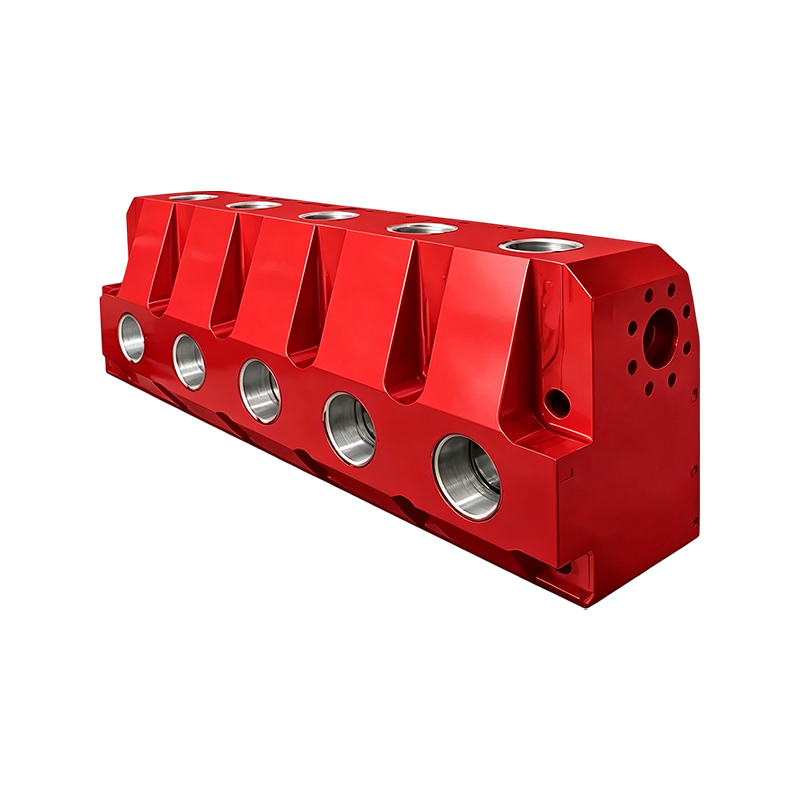
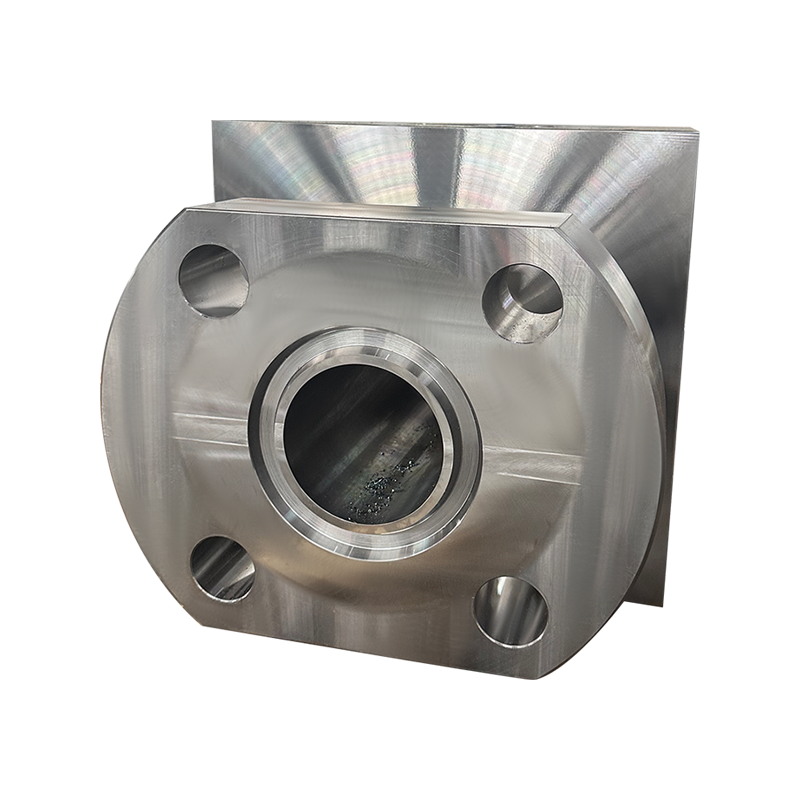
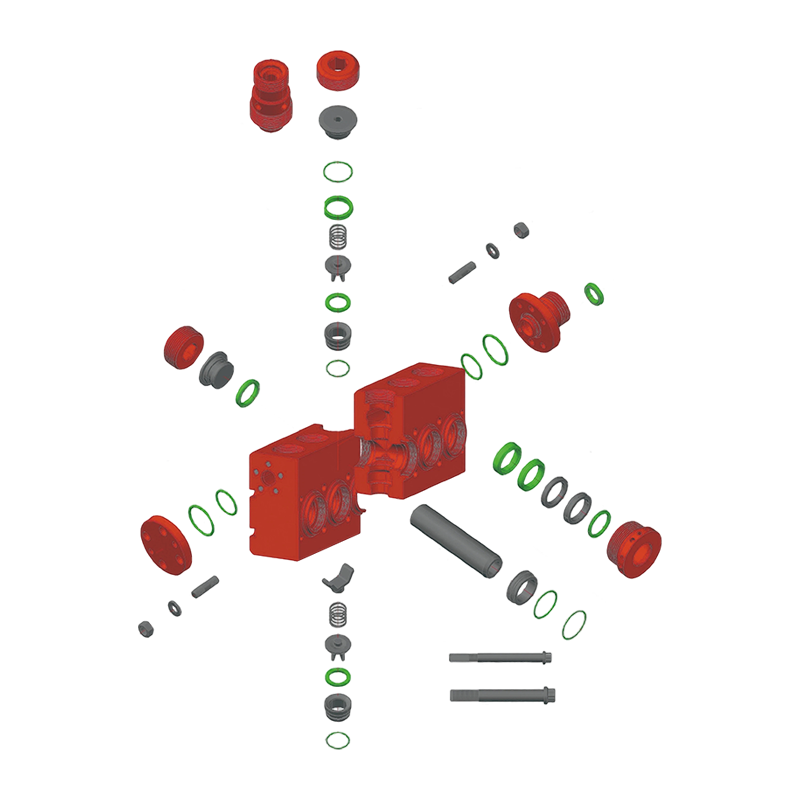
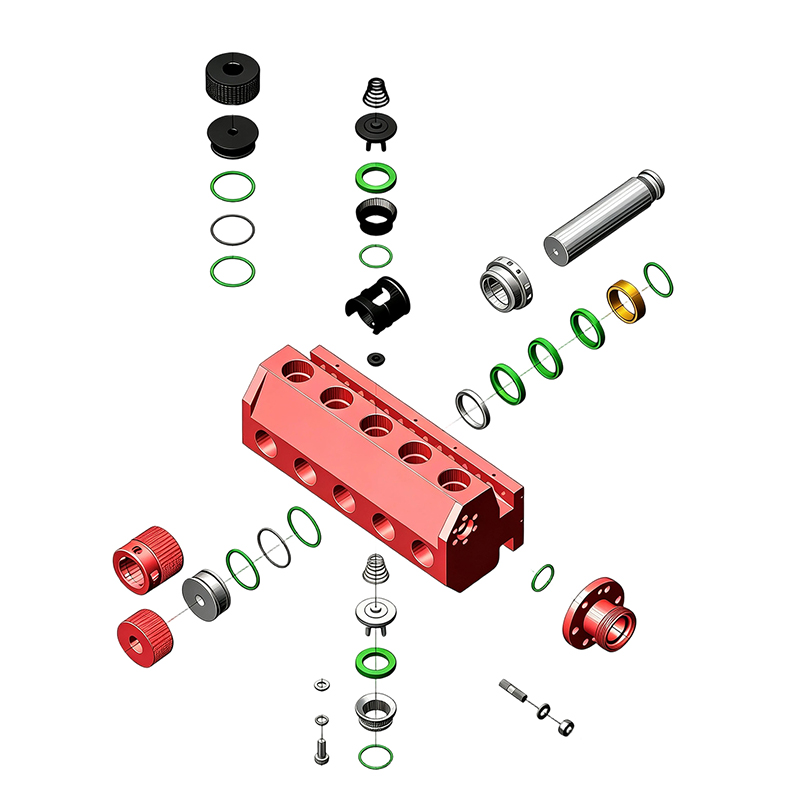
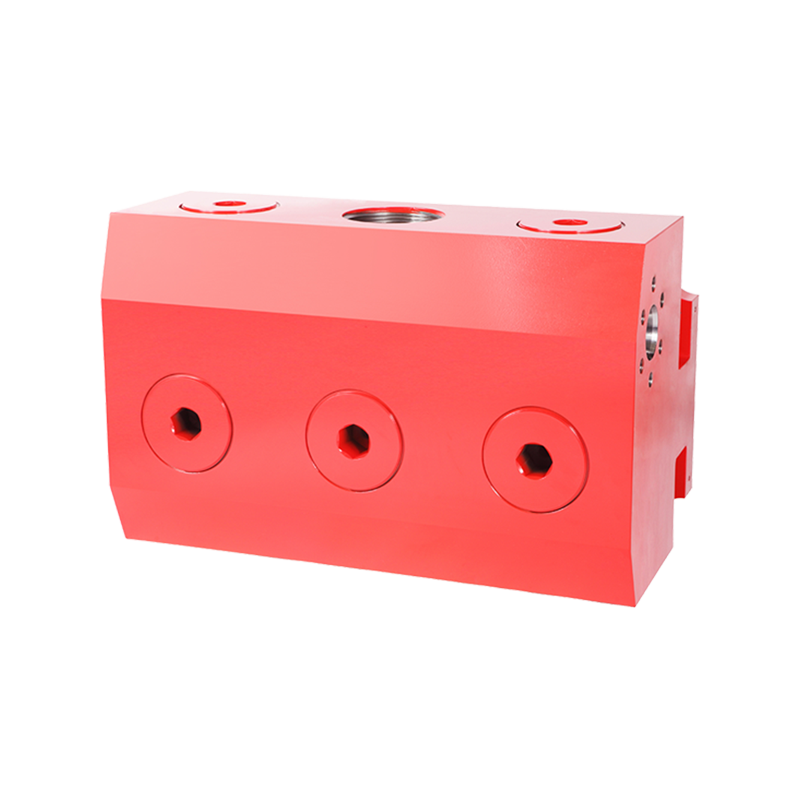
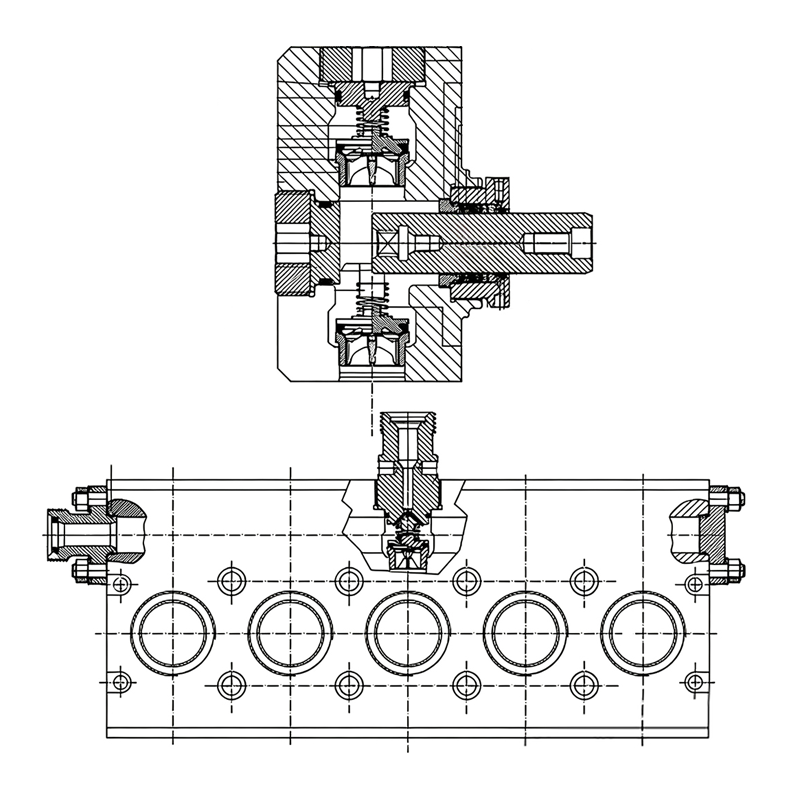
Ask a field supervisor what puts a triplex pump on the ground, and the answer almost always points to the fluid end. A plunger washes out, packing starts weeping, a valve seat stops sealing, and a sm...
READ MORECustom Oilfield Machinery Components: Fluid End, Power End and Manifold Parts
Content
A pump that is down costs more than any part inside it. That is the reality behind most conversations we have with drilling, cementing and well service crews. Custom oilfield machinery components exist because the field rarely hands anyone a textbook operating condition: produced fluids carry more solids, treating pressures creep higher, and the original part number does not always describe the replacement that actually keeps a unit running.
Anhui Exwell New Energy Technology designs and supplies replacement and build-to-order components for high pressure reciprocating pumps. Our manufacturing base sits on 20 acres in Wuhu, Anhui, with an international sales and procurement team working out of Xuancheng. Since 2019 we have delivered fluid ends, power ends, mud pump assemblies, housings and manifold hardware to oil and gas operators and service companies at home and abroad, in both standard and fully customised configurations.
What Makes an Oilfield Component Truly Custom
Custom does not mean unconventional. In oilfield hardware it means the part has been matched to your pump, your fluid and your pressure envelope rather than pulled from a generic catalogue. That can be a change as small as a revised packing bore, or as large as a complete fluid end assembly built to a customer drawing and stamped with a material certificate.
- Dimensional fit: bore size, stroke, flange pattern and mounting geometry that match an existing pump frame or manifold.
- Material grade: alloy steel, stainless or hard-faced trim selected for abrasive slurries, corrosive brines or acidising fluids.
- Pressure class: components rated from 6,000 psi through 15,000 psi working pressure, built to the connection standard your manifold already uses.
- Connection style: hammer union, flange, threaded or integral ends, including the common 602, 1002 and 1502 patterns.
- Documentation: material certificates, dimensional reports and pressure test records supplied with the shipment.
Because we machine and assemble fluid end and power end components under one roof, a custom scope can cover the whole pump rather than a single casting. That is a meaningful advantage when a rig is waiting on a part that nobody stocks.
The Component Families We Build to Order
Our catalogue is organised around the pump and everything connected to it, from the fluid end housing to the last union on the discharge line. The table below summarises the main families, the wear they see and where they normally run.
| Component family | Duty and wear profile | Typical installation |
|---|---|---|
| Fluid end assembly | Erosion, abrasion and fatigue at the bore crossing | Fracturing, cementing, acidising and well service pumps |
| Power end wear parts | Gear, bearing and crosshead wear under continuous load | Triplex and quintuplex pump drives |
| Mud pump housing and assembly | Abrasive drilling fluid erosion on liners and valves | Drilling and mud circulation systems |
| Manifold fittings and integral joints | Erosion, vibration fatigue and thread damage | Fracture and drilling manifolds, flow diversion |
| Unions, swivel joints and pup joints | Seal failure, misalignment and handling wear | Temporary pipework and flexible connections |
| Check, plug, throttle and relief valves | Seat damage, erosion and overpressure events | Pump discharge lines and pressure protection |
The fluid end is usually where custom work pays for itself first. A quintuplex fluid end running at high pressure on a long horizontal well may need a different metallurgy and a tighter bore tolerance than the same size unit used for short cementing jobs. We build replacement fluid ends for five cylinder high pressure and heavy duty well service pumps, and we quote them against the working pressure, the fluid chemistry and the maintenance interval you actually follow.
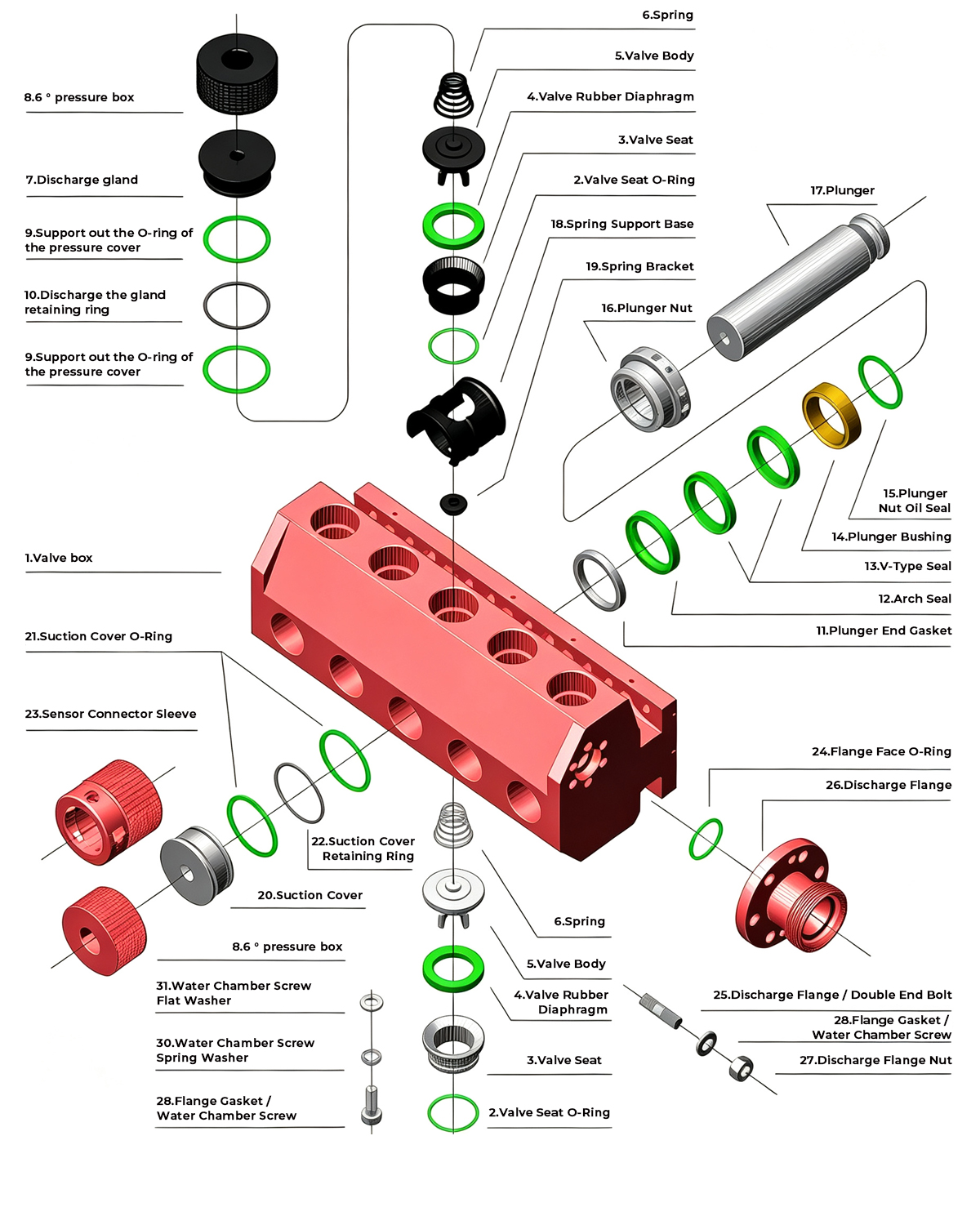 QWS2500 Fluid End AssemblyWe supply 4–5.5 inch substitute parts for SPM QWS2500 pump assemblies with genuine OEM quality. And we can develop new spare parts according to equipment and downhole ...View Product →
Power end components are a different discipline. Wear is gradual rather than catastrophic, so the goal is to match the hardness and geometry of gears, crossheads, bearings and seals closely enough that the drive train wears evenly instead of concentrating load on one surface.
Matching the Component to the Job
Cementing
Cementing pumps push dense, abrasive slurries at high displacement rates, often in a single continuous pass. There is no room for a fluid end that erodes mid job. Three cylinder plunger pumps used in oilfield cementing equipment benefit from hard-faced trim, generous flow paths and a valve and seat combination that tolerates solids. We supply complete fluid end assemblies and individual expendables for these units.
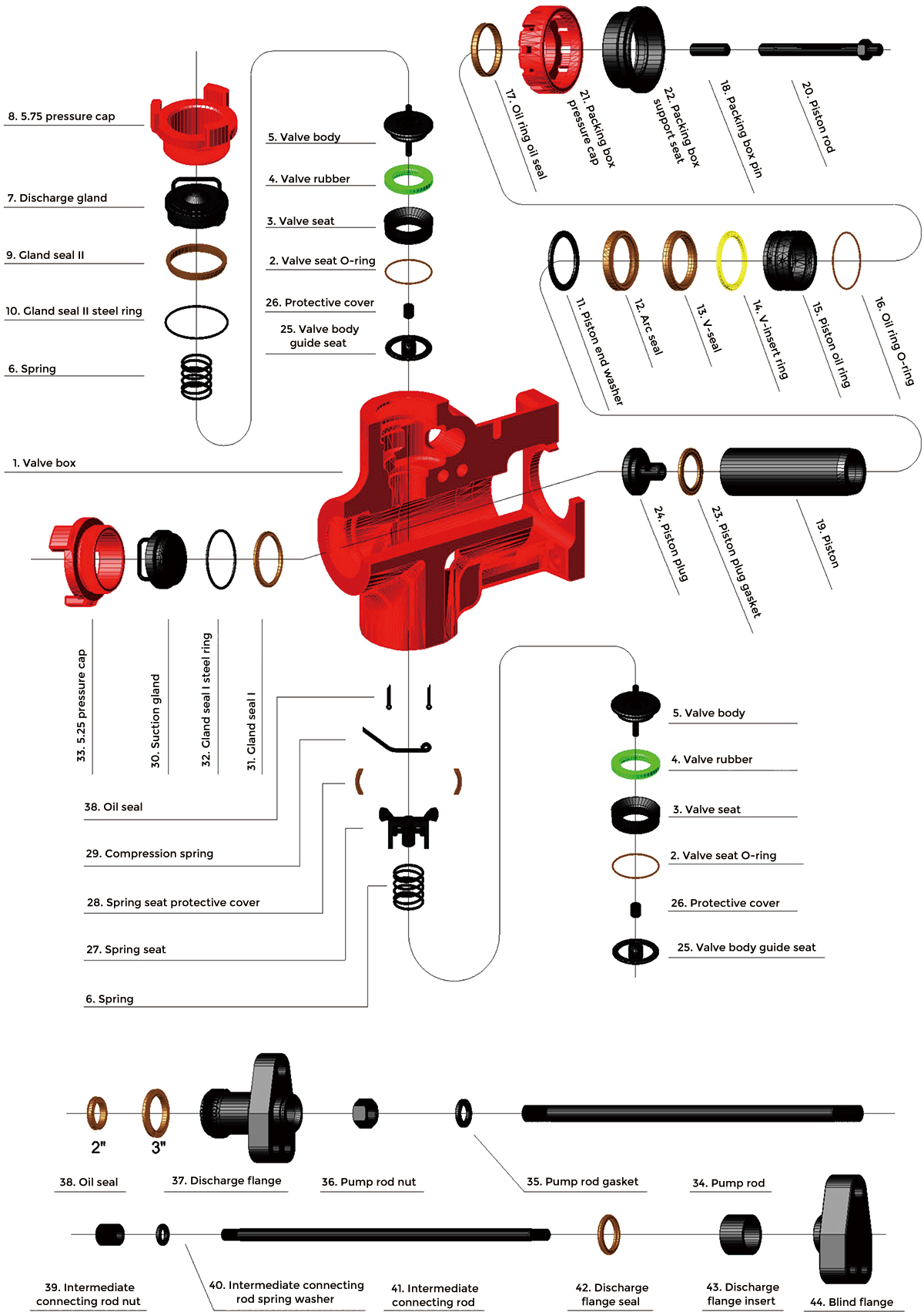 HT400 Fluid End AssemblyWe provide 3–5 inch replacement parts for Halliburton HT400 plunger pumps. All interchangeable spare parts meet OEM quality standards. And we accept custom parts built...View Product →
Fracturing and Well Stimulation
Hydraulic fracturing is the most demanding service in the pump world. Five cylinder pumps run at high pressure for hours at a time, and every internal component is on a wear clock. Custom fluid end assemblies for fracturing operations are quoted with the plunger, packing, valve and seat package specified together, so the whole assembly reaches its replacement window at roughly the same time.
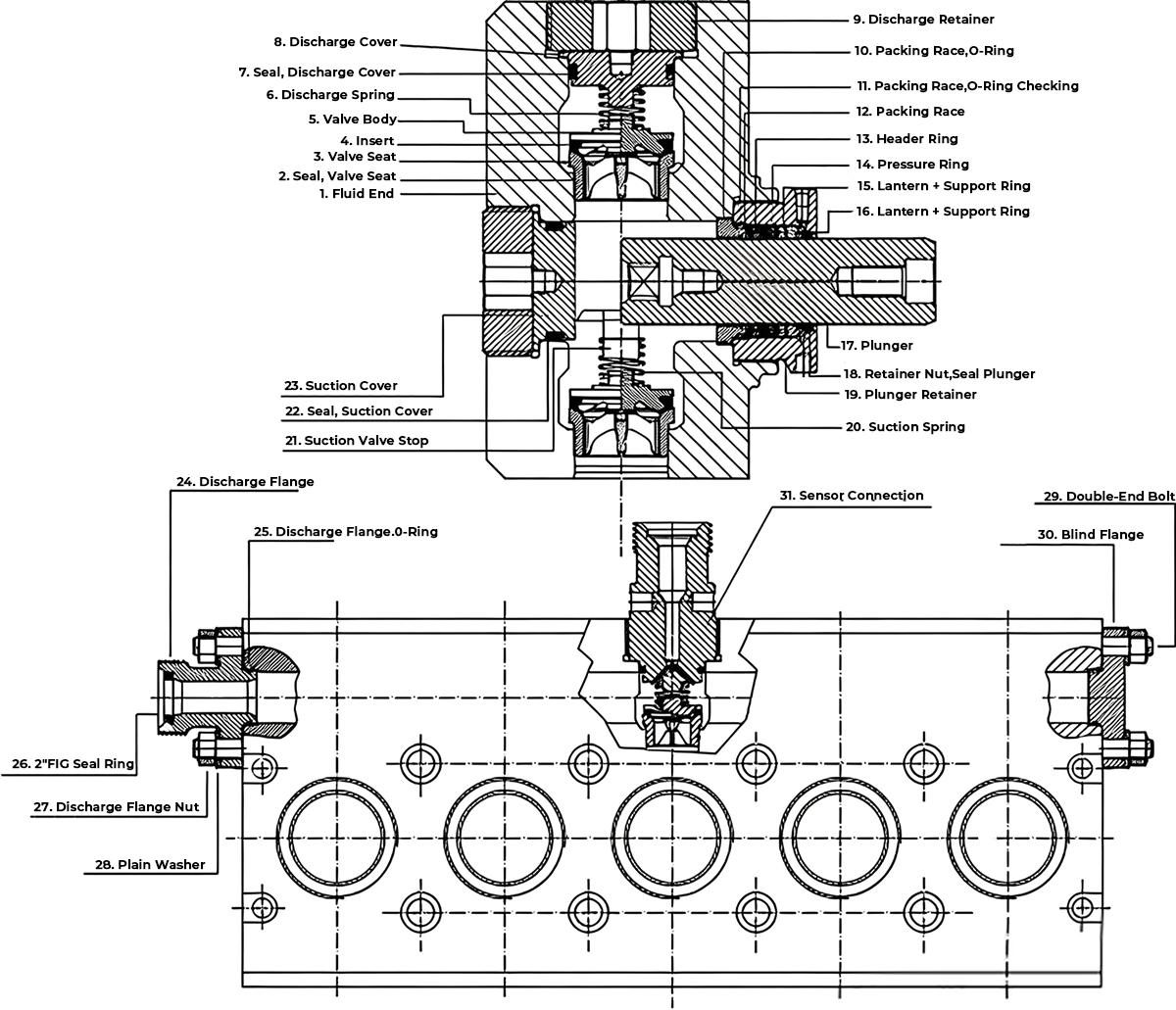 QWS1000 Fluid End AssemblyWe supply 3–5 inch replacement parts perfectly matching SPM QWS1000 pumps. All products comply with OEM specifications. And custom development for different operating ...View Product →
Acidising, Injection and Well Service
Acidising fluids and deep well injection duty put the emphasis on corrosion resistance and seal integrity rather than pure abrasion. Offset plunger pumps used in acidising and fracturing service, compact triplex units built for workover crews, and heavy duty triplex injection pumps all take different trim specifications, and that is exactly the kind of variation a custom build handles well.
Drilling and Mud Circulation
On the drilling side, the mud pump is the heart of the circulation system. Horizontal triplex high pressure pumps, F series plunger mud pumps and high pressure units used in oilfield circulation systems all depend on housings and fluid end bodies that resist abrasive erosion over thousands of operating hours.
Manifolds and Flow Control
Everything downstream of the pump is part of the same pressure envelope. Our high pressure manifold hardware covers long radius elbows, integral tees, crosses and Y pieces, hammer unions, swivel joints, plug valves, throttle valves, check valves and safety relief valves, all available in the pressure class and end connection your existing pipework uses.
How a Custom Order Runs From Enquiry to Delivery
Custom manufacturing only works when the information flow is as reliable as the machining. Our process is deliberately short and transparent.
- Enquiry and application review: you share the pump model, service condition and the failure you are trying to solve.
- Technical proposal: we confirm dimensions, material grade, pressure rating and connection standard, and flag anything that needs a drawing.
- Drawing approval: where a part is non standard, you sign off on the dimensional drawing before material is cut.
- Material and machining: certified stock is released to production, with in process inspection at the critical bore and sealing faces.
- Assembly and pressure testing: fluid end assemblies are tested before they leave the shop, with records issued alongside the goods.
- Packing and shipment: export packing is specified for sea or air freight, with spare parts consolidated so nothing arrives separately.
Materials, Testing and Quality Control
Custom work is only as good as the discipline behind it. Our production is standardised, quality control is applied at every stage, and the supply chain behind the machine shop is mature enough to hold tolerances on repeat orders. Where a component is a direct replacement for an internationally branded pump, it is manufactured to the same dimensional and pressure specification rather than to a loose approximation.
- Incoming material verification against mill certificates before release to production.
- Dimensional inspection of bores, threads and flange faces at defined hold points.
- Hydrostatic and functional testing of assemblies that will see full working pressure.
- Traceability records linking finished parts back to heat numbers and inspection results.
If you are planning a maintenance programme rather than a single replacement, our guide to fluid end maintenance and replacement explains how to sequence consumable changes so that pump downtime stays predictable.
What to Send With Your RFQ
The fastest quotations come from complete information. If you can supply the following, we can usually respond with a technical proposal and price in a single exchange.
- Pump make, model, stroke and rated working pressure.
- Part number, drawing number or a photograph with dimensions.
- Fluid description: solids content, pH, H2S or CO2 presence.
- Required connection standard and pressure class.
- Quantity, target delivery date and destination port.
Custom oilfield machinery components are ultimately a service business dressed up as manufacturing. The part matters, but so does the conversation that defines it, the drawing that pins it down and the inspection record that proves it was built correctly. Whether you need a single fluid end assembly, a run of manifold fittings, or a full set of pump consumables shipped to a remote location, our team in Wuhu and Xuancheng is ready to quote against your specification.
Recommended Products
-
QWS2800 High Pressure Quintuplex Pump Fluid End Assembly for Oilfield Well Service
-
Fluid End Housing Assembly for Triplex Mud Pump
-
TWS600S Fluid End Assembly
-
QWS2500 Fluid End Assembly
-
TWS2000 Fluid End Fits 2000 Three-Cylinder Fracturing Units for Severe Service Conditions
-
QWS1000 Fluid End Assembly
News
-
-
Why Fluid End Condition Determines Triplex Pump Uptime On any well service location, the pressure-containing components inside a fluid end absorb more cyclic stress than almost any other part of the ...
READ MORE -
Understanding the Power End in a Triplex Well Service Pump The power end is the mechanical core of any triplex well service pump. It is the assembly responsible for converting rotational input from ...
READ MORE -
When a triplex mud pump stops turning, the whole rig feels it. Every hour that a pump sits idle is lost circulation, lost footage and a very uncomfortable phone call to the drilling supervisor. We ha...
READ MORE
Get in Touch
Your email address will not be published.
Required fields are marked *
contact us
Have a project in mind?
Contact with us
Contact with us
We are happy to answer your questions. Please fill out this form
and one of our professional team will get back to you as soon as possible.

-
Company AddressRoom 2112, Wanxi Jingyuan Building 10, Jichuan Subdistrict, west of Wanxi South Road and north of Diefeng East Road, Xuanzhou District, Xuancheng City, Anhui Province
-
Tel:+86-13063235523
-
E-mail:Exwell.sales@chinafluidendparts.com
Exwell.Petro@chinafluidendparts.com
Exwell.Director@chinafluidendparts.com
Exwell@chinafluidendparts.com
Copyright © Anhui Exwell New Energy Technology Co., Ltd. All Rights Reserved.
OEM High Pressure Drilling Equipment Suppliers
