
 English
 عربى
 русский
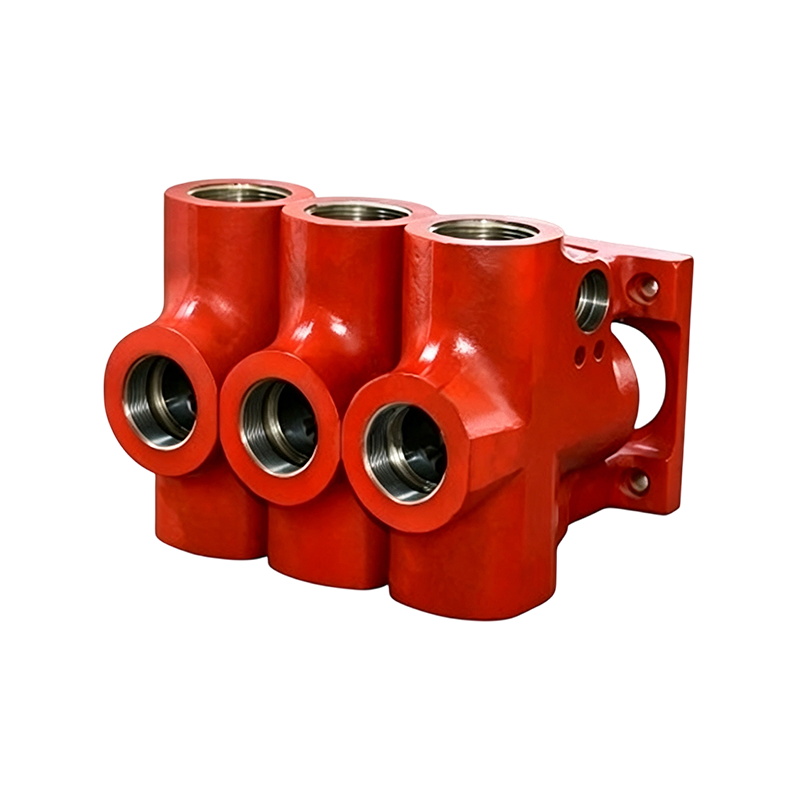
When a triplex mud pump stops turning, the whole rig feels it. Every hour that a pump sits idle is lost circulation, lost footage and a very uncomfortable phone call to the drilling supervisor. We ha...
READ MOREChina Triplex Mud Pump Power End Components: Sourcing and Quality Guide
Content
- 1 What the Power End Does on a Triplex Mud Pump
- 2 Key Power End Components and How They Wear
- 3 How Chinese Manufacturers Keep Power End Quality Consistent
- 4 Matching Power End Parts to the Right Pump Platform
- 5 What to Check on Every Power End Component
- 6 Maintenance Habits That Extend Power End Life
- 7 Frequently Asked Questions
A triplex mud pump is only as reliable as the power end bolted behind its fluid end. The power end takes torque from the diesel engine or the electric motor and turns it into the straight-line stroke that drives the pistons. When a crankshaft, a pinion shaft or a crosshead wears out, the pump loses pressure and the whole rig slows down.
We see that pattern almost every week. Our manufacturing site in Wuhu, Anhui covers 20 acres, and power end, fluid end and complete mud pump parts are machined, heat-treated and assembled under the same roof. What follows is the same explanation we give customers who ask about China triplex mud pump power end components before they place a first order.
What the Power End Does on a Triplex Mud Pump
On a typical triplex mud pump, the power end performs four jobs at once. First, it reduces the input speed from the prime mover down to a crankshaft speed that suits the pump size. Second, it converts that torque into three reciprocating strokes spaced 120 degrees apart, so the fluid end delivers a steady volume rather than a series of pulses. Third, it absorbs alternating loads, because every revolution repeats the same pressure wave while abrasive solids travel through the drilling fluid. Fourth, it provides the machined datum that keeps the liners, the clamps and the fluid end assembly correctly aligned.
Because all four duties happen simultaneously, a single worn component rarely fails alone. An oval crankshaft journal raises bearing temperature, which thins the oil film, which then damages the connecting rod bearing. Reading the whole assembly instead of one part is what separates a repair from a repeat failure.
Key Power End Components and How They Wear
Every power end part wears, but at very different rates. The table below breaks down the main components and the points we inspect when a replacement decision comes up.
| Component | Function | Typical material |
|---|---|---|
| Crankshaft | Converts rotation into three reciprocating strokes at 120 degree offsets | Forged alloy steel, nitrided journals |
| Pinion shaft and gears | Reduces speed and multiplies torque toward the crankshaft | Carburized alloy steel, ground teeth |
| Connecting rod | Carries the eccentric motion of the crank to the crosshead | Forged steel with replaceable bearing shells |
| Crosshead and pin | Keeps the reciprocating motion centred and transfers it to the pony rod | Case hardened steel |
| Main bearings | Support the crankshaft under alternating heavy loads | Tapered roller bearings or babbitt shells |
| Frame and liner | Holds every rotating part in alignment and absorbs the reaction load | Cast steel or welded fabrication |
| Lubrication system | Delivers and distributes oil to the loaded points | Gear pump, piping, filters |
Crankshafts, gears and crossheads are the three items that retire first. An oval journal, pitting on a gear flank or scoring on a crosshead guide all say the same thing: the assembly has reached the end of its working life and a patch repair will not hold.
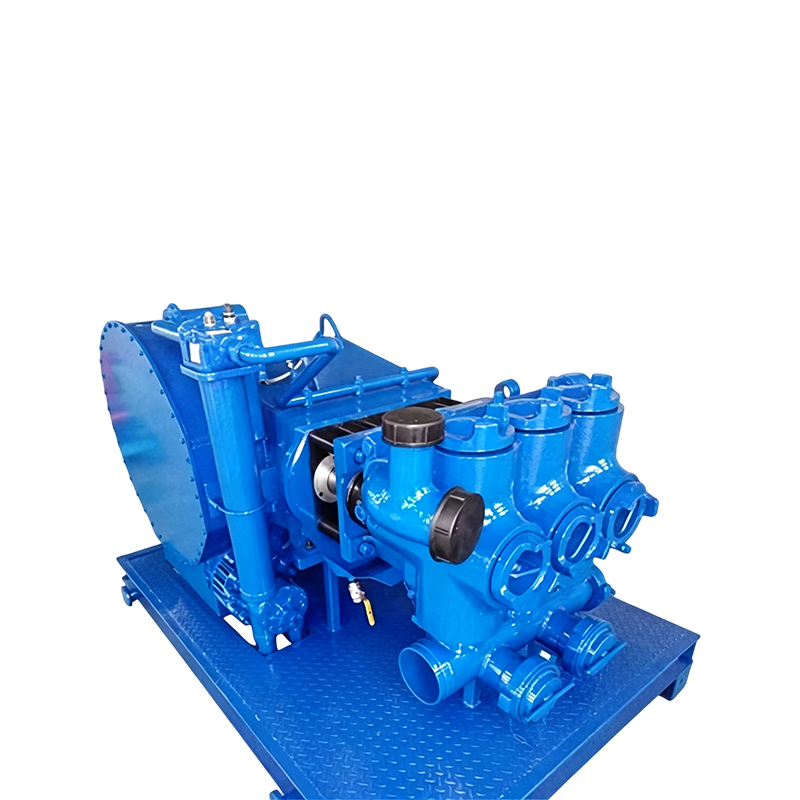 Heavy Duty Triplex Pump HT400 Wear Components for Oil & Gas FieldProduct Overview The HT400 Triplex Pump is a heavy‑duty three‑plunger pump designed for high‑pressure oilfield operations. It features an 8‑inch stroke, with a rated m...View Product →
How Chinese Manufacturers Keep Power End Quality Consistent
Buyers often ask why two quotes for the same part number can differ so much. The answer usually sits in the process route rather than in the drawing itself.
Material and Heat Treatment
Forged blanks need a grain flow that follows the load path. Crankshafts and pinion shafts are normalised and rough machined, then finish heat treated: journals nitrided, gear teeth carburized, depending on the original design intent. Surface hardness alone tells you very little. We look at case depth, at the hardness gradient under the tooth flank and at the fillet radius that controls stress concentration. A crankshaft that breaks in service almost always broke at a fillet that was ground to the wrong radius.
Machining and Dynamic Balance
Journals are ground to tight roundness and cylindricity tolerances, and the crankshaft and gear assembly is balanced as a unit at the operating speed of the pump. Where a customer specifies it, critical items go through third-party non-destructive testing, and those reports travel with the mill certificates and the final inspection sheet. That documentation trail is what makes a power end part traceable years later.
Matching Power End Parts to the Right Pump Platform
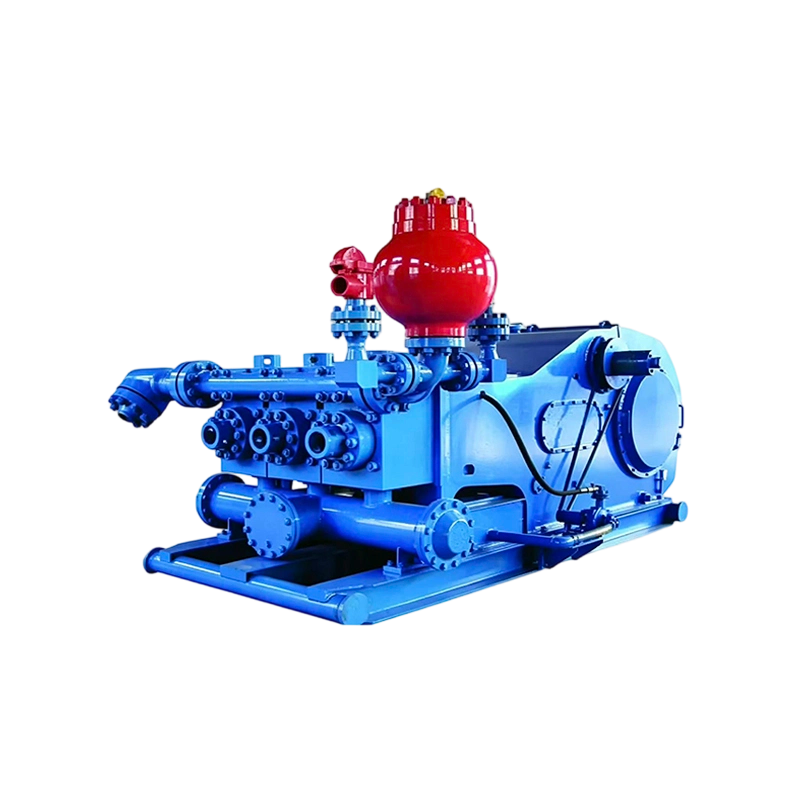
Fit is decided by the pump platform, not by bolt hole spacing alone. F-series triplex plunger mud pumps are the long-standing workhorse of drilling and well service work, and their crankshafts, connecting rods and crossheads follow fixed dimensions. Get the tooth form on a pinion shaft wrong and the flank will spall within weeks. We keep complete power end wear parts and assemblies for this family in stock.
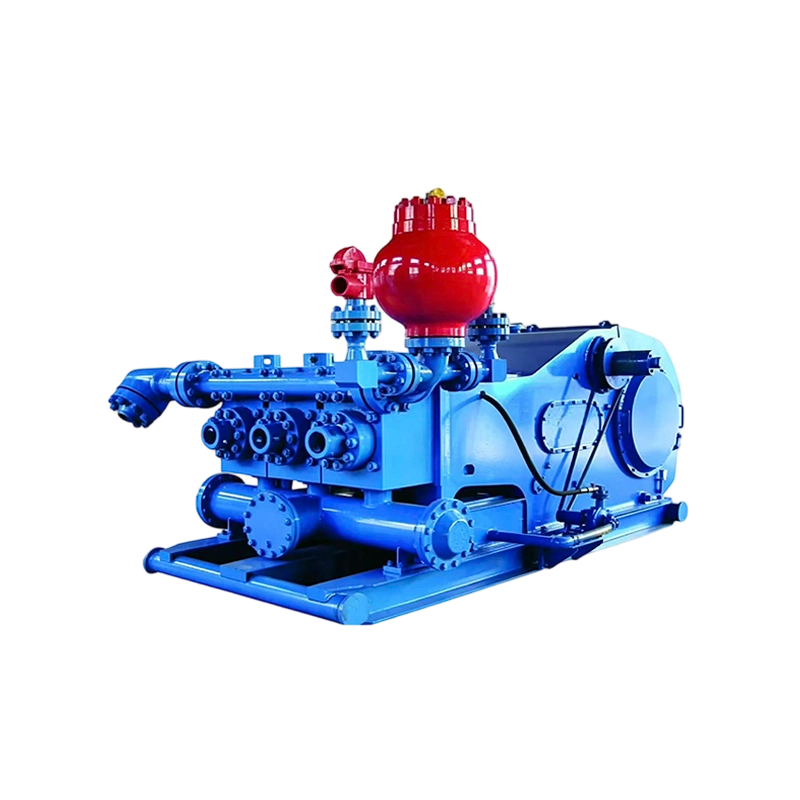 High Pressure Triplex Plunger Mud Pump F Series For Petroleum DrillingModel:F-500、 F-800、F-1000、F1300、F1600、F 2200View Product →
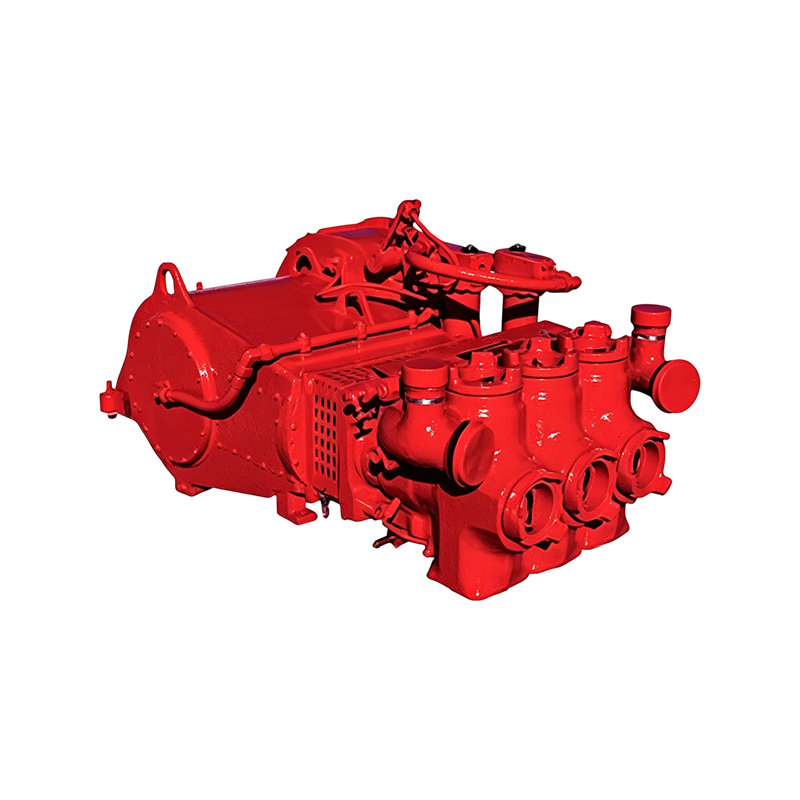
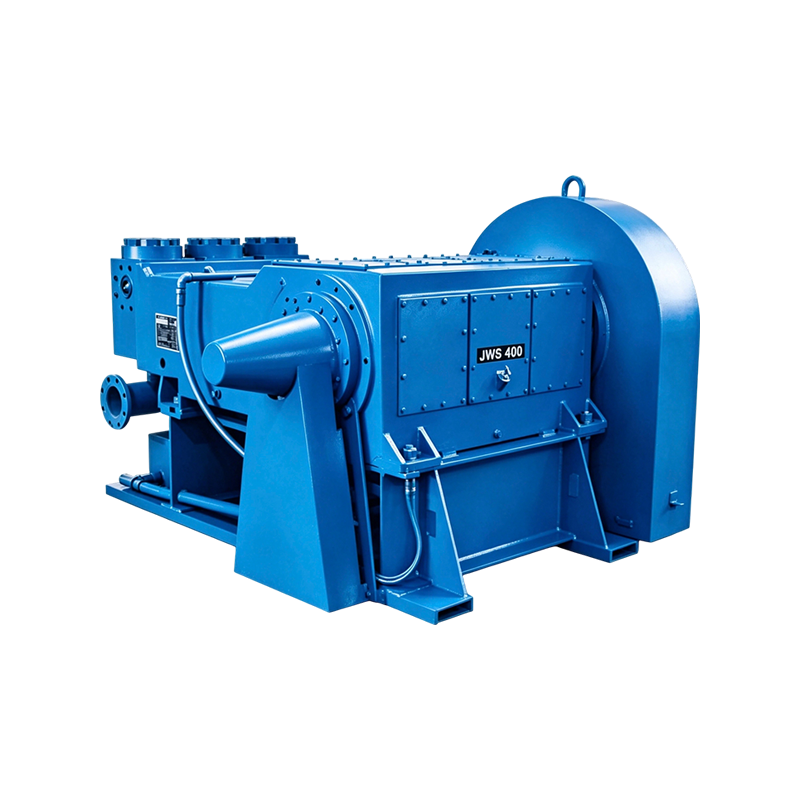
The JWS400 behaves differently again. This horizontal triplex high pressure pump is used for drilling mud service and workover duty, so the package is more compact than a large drilling pump but the pressures are still demanding. Frequent starts and stops during well service work wear crosshead pins, connecting rod bearings and main bearings faster than steady drilling would.
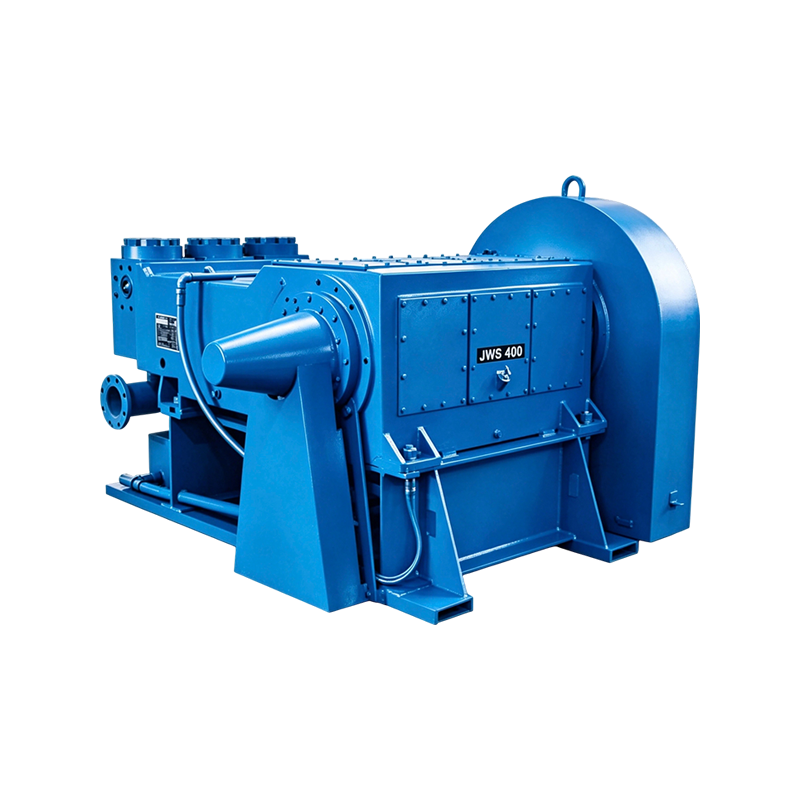 JWS400 Horizontal Triplex High-Pressure Drilling Mud PumpRated bhp at 286 rpm: 400HP (298KW)View Product →
Beyond these two, our power end product line covers the HT400, QWS1000, QWS2500, TWS2250 and TWS600S platforms, from heavy quintuplex fracturing pumps to compact triplex well service units. Each assembly has its own set of wear components, and ordering against the correct pump model saves weeks of back and forth.
What to Check on Every Power End Component
Before requesting a quotation, run this checklist against the parts you plan to replace:
- Crankshaft: measure journal diameter and roundness, inspect fillets for cracking, confirm stroke and eccentricity against the original documentation.
- Gears and pinion shaft: check tooth flank pitting, tooth thickness, tooth form and alignment between the gear and the spline.
- Connecting rod: check big end shell contact pattern, measure small end bushing bore and look for bending along the shank.
- Crosshead and pin: inspect for scoring and fretting, measure pin outside diameter and verify the guide clearance.
- Frame and liner: check mounting bores, liner bore wear and any sign of cracking near the main bearing seats.
- Lubrication system: verify gear pump output, filter condition and internal oil gallery cleanliness.
Sending photographs alongside the measurements shortens the review considerably, especially when the part number has been superseded over the years.
Maintenance Habits That Extend Power End Life
In our experience, premature power end failure traces back to three things: lubrication, alignment and bolt torque.
- Follow the pump maker's oil change interval and shorten it when oil analysis shows contamination, because gear wear debris accelerates bearing damage.
- Recheck alignment of all rotating components at every overhaul, since a frame that sits slightly out of true will keep grinding its gears.
- Retorque connecting rod bolts and main bearing caps to specification with a calibrated wrench, working in a cross pattern.
- Inspect crankshaft seals and breathers regularly, because dust and drilling fluid entering the crankcase shorten every component life in the assembly.
- Record vibration readings and oil analysis results so that small problems surface during a planned service window instead of mid-well.
We covered the practical side of this in more detail in our JWS400 power end maintenance guide, including the parts that deserve the closest attention.
Frequently Asked Questions
Can you supply power end parts for F-series mud pumps?
Yes. Crankshafts, pinion shafts, gears, connecting rods, crossheads, crosshead pins, bearings and frames are normally available, either against a full drawing set or from a sample part that we can measure.
How long does a custom power end order take?
Standard wear parts usually ship from stock within weeks. New forging tooling or a bespoke crankshaft depends on the forging and heat treatment schedule, and we state that lead time in the quotation rather than after the order.
What quality documents come with the shipment?
Mill certificates, heat treatment records and final inspection reports are standard. Third-party non-destructive testing or dimensional verification can be arranged for critical items and included in the same document package.
Do you sell individual parts or complete assemblies?
Both. Many customers replace only the worn items such as bearing shells, crosshead pins and gears, while others prefer a pre-assembled power end when the shutdown window is short. The better option depends on pump condition and how much downtime the operation can absorb.
The power end is not the most visible part of a rig, but its condition decides how far and how long a mud pump can push. If you are comparing suppliers of China triplex mud pump power end components, the fastest route forward is to send your parts list, the pump model and any drawings with part numbers. Our team will check them item by item and come back with a quotation you can plan a shutdown around.
Recommended Products
-
Fluid End Housing Assembly for Triplex Mud Pump
-
TWS3000 Heavy-Duty Triplex Pump Fluid End.
-
High Pressure Triplex Plunger Mud Pump F Series For Petroleum Drilling
-
Heavy Duty Triplex Pump HT400 Wear Components for Oil & Gas Field
-
Triplex Plunger Pump HT400 Spare Parts for Oilfield Cementing Equipment
-
JWS400 Horizontal Triplex High-Pressure Drilling Mud Pump
News
-
-
Why Fluid End Condition Determines Triplex Pump Uptime On any well service location, the pressure-containing components inside a fluid end absorb more cyclic stress than almost any other part of the ...
READ MORE -
Understanding the Power End in a Triplex Well Service Pump The power end is the mechanical core of any triplex well service pump. It is the assembly responsible for converting rotational input from ...
READ MORE -
Ask a field supervisor what puts a triplex pump on the ground, and the answer almost always points to the fluid end. A plunger washes out, packing starts weeping, a valve seat stops sealing, and a sm...
READ MORE
Get in Touch
Your email address will not be published.
Required fields are marked *
contact us
Have a project in mind?
Contact with us
Contact with us
We are happy to answer your questions. Please fill out this form
and one of our professional team will get back to you as soon as possible.

-
Company AddressRoom 2112, Wanxi Jingyuan Building 10, Jichuan Subdistrict, west of Wanxi South Road and north of Diefeng East Road, Xuanzhou District, Xuancheng City, Anhui Province
-
Tel:+86-13063235523
-
E-mail:Exwell.sales@chinafluidendparts.com
Exwell.Petro@chinafluidendparts.com
Exwell.Director@chinafluidendparts.com
Exwell@chinafluidendparts.com
Copyright © Anhui Exwell New Energy Technology Co., Ltd. All Rights Reserved.
OEM High Pressure Drilling Equipment Suppliers
