
 English
 عربى
 русский
A purchase order for a replacement fluid end rarely fails on price. It fails on pressure class, bolt pattern, or a material certificate that arrives three days after the part, and the rig waits whil...
READ MOREHigh Pressure Drilling Equipment Manufacturer: How to Specify and Verify
Content
- 1 What a High Pressure Drilling Equipment Manufacturer Actually Supplies
- 2 Pressure Ratings and Figure Numbers: The First Filter
- 3 Fluid End and Power End Are Two Different Buying Decisions
- 4 How to Verify a Manufacturer Without Boarding a Plane
- 5 Matching the Component to the Operation
- 6 Interchangeability, Lead Time and the Cost of a Wrong Part
- 7 What to Put on the Order Sheet
- 8 Buying Questions That Come Up Before the Order
A 15,000 psi plug valve and a 6,000 psi elbow can arrive in identical crates with identical grey paint, and the difference only shows up when the manifold is pressured up. That gap, 103.4 MPa against 41.4 MPa, is what a high pressure drilling equipment manufacturer is expected to control on paper, at the heat-number level, and across every repeat order.
What a High Pressure Drilling Equipment Manufacturer Actually Supplies
A high pressure drilling equipment manufacturer supplies pressure-containing components and wear parts rated between 6,000 psi and 15,000 psi, or 41.4 MPa and 103.4 MPa, for drilling, cementing, fracturing, acidizing, well service and well stimulation. Inside that band, the pressure rating is the product; the geometry is secondary.
Working definition
High pressure drilling equipment is every component in the wellbore fluid path whose rated working pressure is 6,000 psi (41.4 MPa) or higher and which is built to a published API specification. That covers fluid ends, mud pump bodies and housings, manifolds, elbows, hammer unions, plug valves, check valves and relief valves.
The category resolves into four buying families: fluid end assemblies and their consumables, power end wear components, mud pump assemblies and housings, and high pressure manifold hardware. Anhui Exwell New Energy Technology Co., Ltd. (Exwell), a manufacturer founded in 2019 with a 20-acre plant in Wuhu, Anhui Province, builds across all four, from HT400 and TWS600S triplex fluid ends through to the QWS2800 quintuplex body and the FIG 602, 1002 and 1502 fittings that connect them.
Pressure Ratings and Figure Numbers: The First Filter
API Figure designations define a pressure class, not a size. FIG 602 hardware is rated 6,000 psi (41.4 MPa), FIG 1002 is rated 10,000 psi (69.0 MPa), and FIG 1502 is rated 15,000 psi (103.4 MPa). Two fittings with the same nominal bore but different Figure numbers cannot be interchanged on a live line.
Rated working pressure by API Figure designation
FIG 602
41.4 MPa
FIG 1002
69.0 MPa
FIG 1502
103.4 MPa
| API Figure | Rated working pressure | Metric equivalent | Typical duty |
| FIG 602 | 6,000 psi | 41.4 MPa | Return lines, low pressure manifolds, boiler relief |
| FIG 1002 | 10,000 psi | 69.0 MPa | Cementing units, well service manifolds |
| FIG 1502 | 15,000 psi | 103.4 MPa | Fracturing manifolds, high pressure treating lines |
Bore size is a separate variable. Exwell's long-radius bend range runs from 2 in to 4 in across working pressures of 42 MPa to 105 MPa, so one bore appears in more than one pressure class. Specify Figure designation and bore together, and confirm that the Y-shaped, lateral and cross fittings on the same line agree.
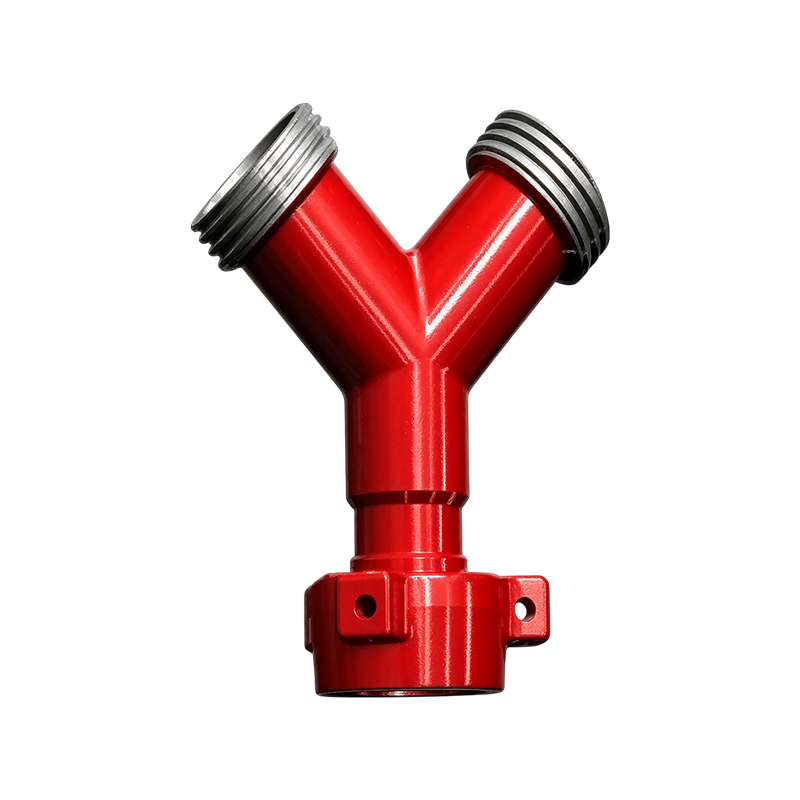 FIG 602/1002/1502 High-Pressure Integral Y-Shaped Manifold JointWorking pressure: 42MPa-105MPa(6000psi–15000psi)View Product →
Fluid End and Power End Are Two Different Buying Decisions
The fluid end is the consumable half of a plunger pump; the power end is the durable half. Folding both into a single budget line is the most common costing error in well service planning, because the two fail for entirely different reasons.
Fluid end: the consumable half
- Valves, seats, plungers, packing and the fluid end body carry abrasive slurry, proppant and acid at full rated pressure
- Washout, seat pitting and packing leakage dominate the replacement list
- Bodies are usually replaced as an assembly once the taper seats pass their reaming limit
Power end: the durable half
- Crankshaft, connecting rods, crossheads, bearings and gearing transmit the mechanical load
- Failures track lubrication condition, alignment and duty cycle rather than fluid chemistry
- Wear components come out on a predictable interval rather than on a breakdown
A worn fluid end is often better served by a complete assembly than by a box of individual parts. Exwell's custom spare part line covers HT400, QWS1000, QWS2500, TWS2250 and TWS600S fluid end assemblies built to customer drawings, which matters when a pump has been modified in the field and the original part number no longer describes the machine on the pad. Our fluid end maintenance and replacement parts guide sets out the wear limits that trigger that decision.
Keep the maintenance record tied to bore and stroke. A fluid end that has already been reamed once is not equivalent to a new one, and its remaining service life has to be costed into the comparison.
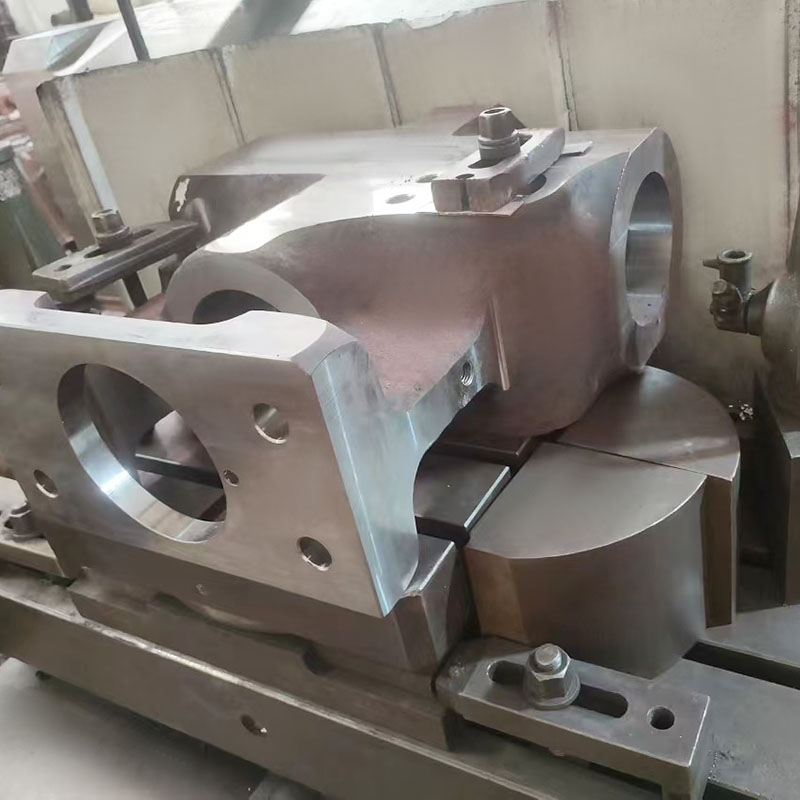 Triplex Plunger Pump HT400 Spare Parts for Oilfield Cementing EquipmentProduct Overview The HT400 Fluid End Assembly is a critical high-pressure component designed for triplex plunger pumps used in demanding oilfield services. Engineered ...View Product →
How to Verify a Manufacturer Without Boarding a Plane
Three documents separate a manufacturer from a trading desk: a material certificate traceable to a heat number, a hydrostatic test report at 1.5 times the rated working pressure, and a dimensional inspection report that lists measured values rather than a pass stamp.
$85.7M Annual output value published by Exwell
$34.2M Export sales published by Exwell
20 acres Manufacturing site in Wuhu, Anhui Province
50 to 99 Employees at the manufacturing base
Those four figures are self-reported by the company, so treat them as the start of an audit rather than its conclusion. Capacity claims are only useful when they can be matched to a specific order, a specific machine list and a specific test bench.
Test pressure
Hydrostatic test pressure for a 15,000 psi component is 22,500 psi, or 155.1 MPa, under the 1.5 times rated working pressure convention. Ask for the individual test chart with the serial number on it, not a generic certificate of conformity.
Five checks carry most of the weight in a remote supplier audit:
- Material grade and heat number on the certificate, matched to the grade called for on the drawing
- Hardness results on the pressure-containing surfaces, recorded per batch rather than per year
- Hydrostatic test pressure, hold time and the instrument used to record it
- Thread and taper inspection with actual gauge readings, especially on hammer unions and seat bores
- Traceability from finished part back to the casting or forging lot number
Matching the Component to the Operation
Component selection follows the operation rather than the catalogue order. Cementing work is defined by heavy solids loading at moderate pressure, fracturing by the 10,000 psi to 15,000 psi band, and mud circulation by continuous flow at lower discharge pressure with far longer running hours.
| Operation | Equipment family | Pressure class | Highest-wear item |
| Cementing | HT400 triplex plunger pump | 6,000 psi to 10,000 psi | Fluid end body, plungers, packing |
| Hydraulic fracturing | QWS1000 quintuplex, TWS2500 triplex | 10,000 psi to 15,000 psi | Fluid end, valves and seats |
| Acidizing and fracturing | TWS600S offset plunger pump | 10,000 psi class | Plungers, packing, fluid end |
| Well service and workover | QWS2500 quintuplex, JWS400 triplex | 10,000 psi to 15,000 psi | Fluid end and power end wear parts |
| Drilling and mud circulation | 7P50 and F-series triplex mud pumps | Up to 5,000 psi discharge | Housing, fluid end housing assembly |
| Deep well injection and stimulation | TWS2250 triplex | 10,000 psi to 15,000 psi | Fluid end, valves |
A single supplier that covers fluid ends, power ends, mud pump housings and manifold hardware shortens the qualification workload, because one test regime and one material specification govern the whole package. The risk to watch is catalogue overlap: the same fluid end model can appear both as a standard item and as a custom assembly, and the two carry different inspection scopes.
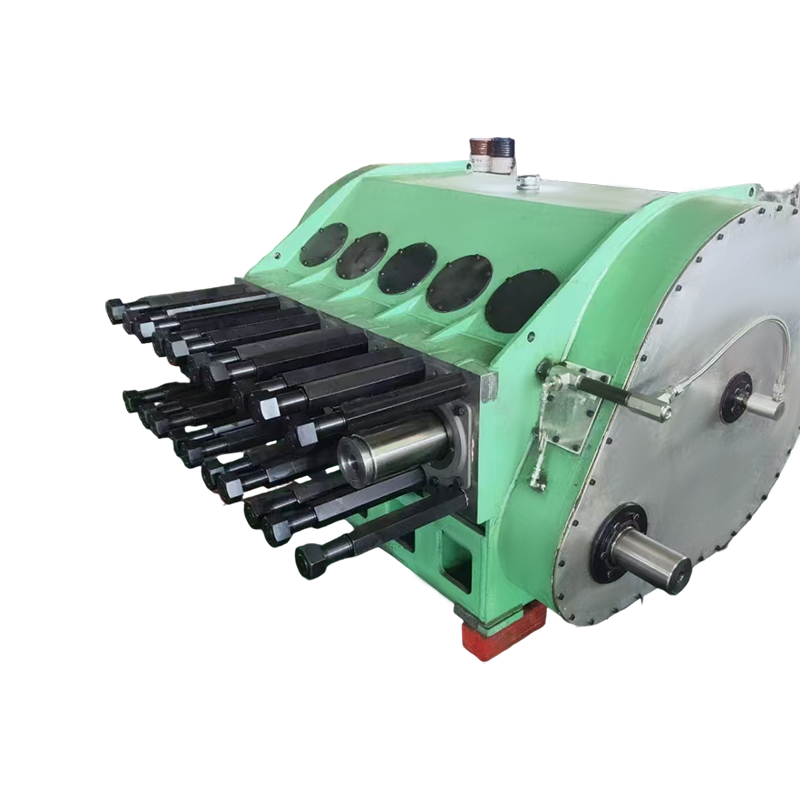 QWS2500 High‑Pressure Heavy‑Duty Quintuplex Fracturing PumpProduct Overview The QWS2500 Triplex Pump is a high‑power three‑plunger pump dedicated to oilfield fracturing. It adopts an 8‑inch stroke and 6.353:1 gear ratio, with ...View Product →
Interchangeability, Lead Time and the Cost of a Wrong Part
Interchangeability failures cost more than price differences. A fluid end that will not bolt to the existing manifold turns a stocked spare into scrap, and on a 15,000 psi fracturing spread that can idle a crew of 10 to 20 people for the full length of a replacement lead time.
Five dimensions decide whether a replacement actually fits:
- Stud pattern and bolt circle diameter on the fluid end flange
- Plunger diameter and stroke length, matched to the power end frame
- Valve seat angle and seat bore, which differ between pump families
- Discharge connection bore and thread form, including the hammer union Figure number
- Overall length and mounting footprint against the skid or trailer
A fluid end that does not match the manifold is not a spare part. It is inventory sitting on a shelf while the crew waits.
What to Put on the Order Sheet
A purchase order that carries these six items in writing removes almost every source of a wrong shipment, and it gives the supplier no room to substitute a lower pressure class on a rush job.
- Record the pump identity
Model, frame size, plunger diameter, stroke and rated working pressure, taken from the nameplate rather than from purchase history.
- Name the operation and the fluid
Cementing, fracturing, acidizing, mud circulation, injection or well service, plus the abrasive content of the fluid.
- State the pressure class and Figure designation
Rated working pressure in psi and MPa, plus the API Figure number for every manifold item on the same line.
- Request the three documents
Material certificate with heat number, hydrostatic test chart at 1.5 times rated working pressure, and a dimensional inspection report.
- Confirm interchangeability dimensions in writing
Bolt circle, seat bore, plunger diameter, connection bore and overall length recorded as numbers on the order.
- Define the spares kit and packaging
Which consumables travel with the assembly, how each part is marked, and how it is protected for sea freight.
Buying Questions That Come Up Before the Order
What working pressure should a replacement fluid end be rated for?
Match the rated working pressure of the pump it serves, exactly. Fitting a 10,000 psi body to a 15,000 psi pump downgrades the entire pressure system, and the manifold, relief valve and treating line ratings must all be reviewed at the same time. Uprating is equally unsafe, because thread forms, torque values and test pressures move together as a set.
Is a custom fluid end assembly more expensive than a catalogue part?
Not automatically. The cost driver is whether a verified drawing already exists, not the word custom. Exwell builds custom fluid end assemblies for the HT400, QWS1000, QWS2500, TWS2250 and TWS600S families, and the price difference against a standard body is typically smaller than the cost of adapting a manifold in the field.
What lead time is realistic for a replacement fluid end or manifold fitting?
Stocked manifold fittings such as elbows, unions and check valves move in days. A custom fluid end assembly runs on casting or forging lead time plus machining plus hydrostatic testing, which is a matter of weeks rather than days. Ask for the hydrostatic test date on the order confirmation, because a ship date without a test date tells you nothing about readiness.
How many spare parts should be kept on site?
Size the holding to the lead time rather than to a fixed list. If a replacement fluid end body takes eight weeks to arrive, holding one body on site is cheaper than eight weeks of downtime on a fracturing spread, and the same logic sets the count for valve and seat sets, packing and plungers.
Bottom line
Buy the rating, the traceability and the fit, in that order. A supplier that can put a heat number, a 1.5 times hydrostatic test chart and a bolt circle measurement on the same page is a manufacturer, whatever its price per unit says.
High pressure drilling equipment is unforgiving of approximation. Whether the order is a single FIG 1502 elbow or a complete HT400 fluid end assembly, the specification that matters is the one written down: rated working pressure in psi and MPa, material grade with a heat number, a hydrostatic test at 1.5 times rating, and dimensions measured rather than assumed. Suppliers that publish those numbers and stand behind them are the ones worth a second order.
Recommended Products
-
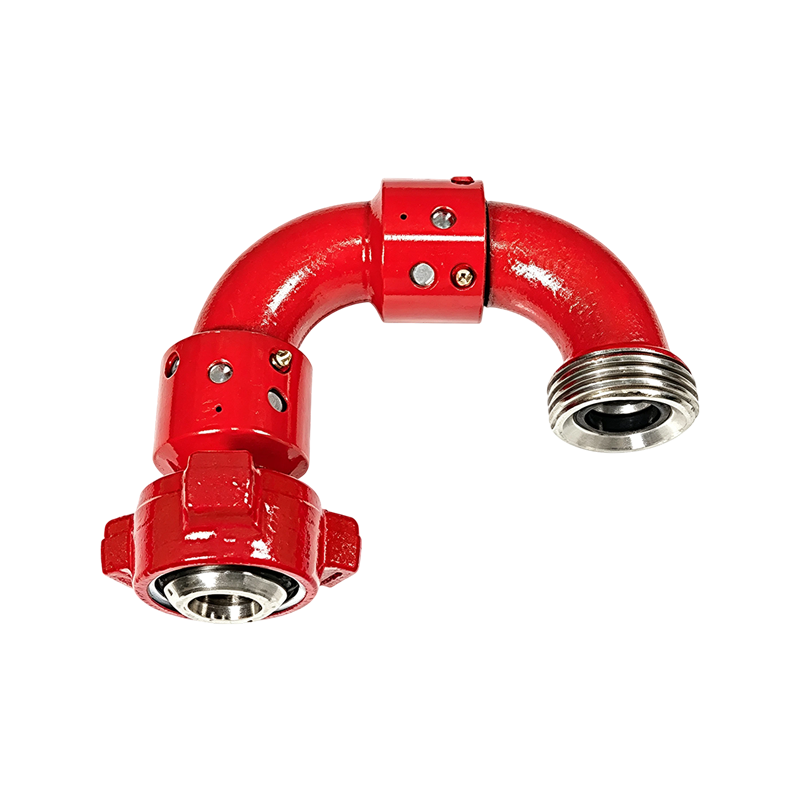
2" to 4" Long Radius Bend 50 Swivel Joint for High-Pressure Oilfield Equipment
-
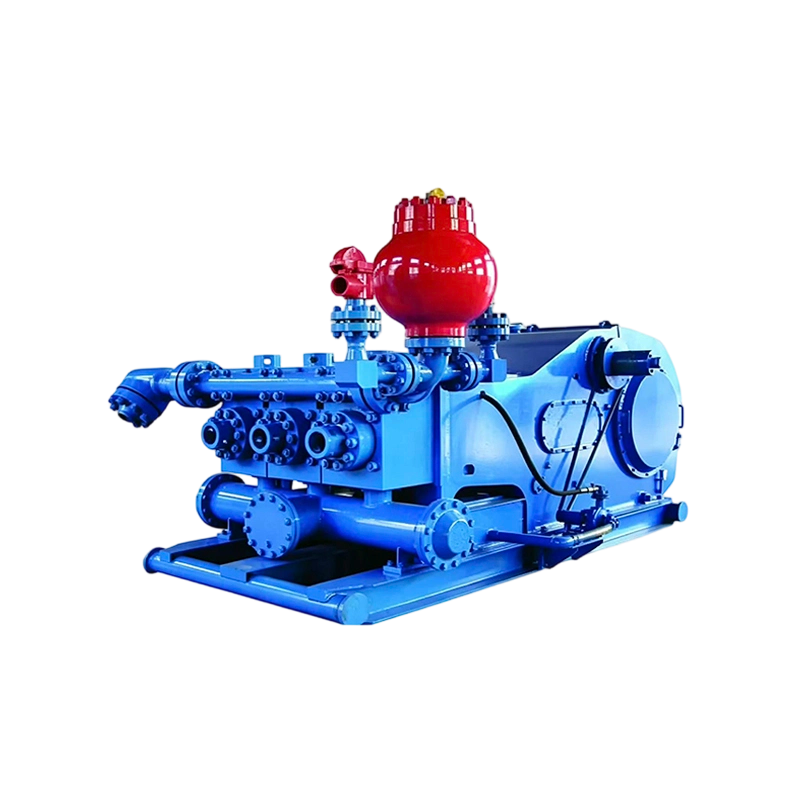
High Pressure Triplex Plunger Mud Pump F Series For Petroleum Drilling
-
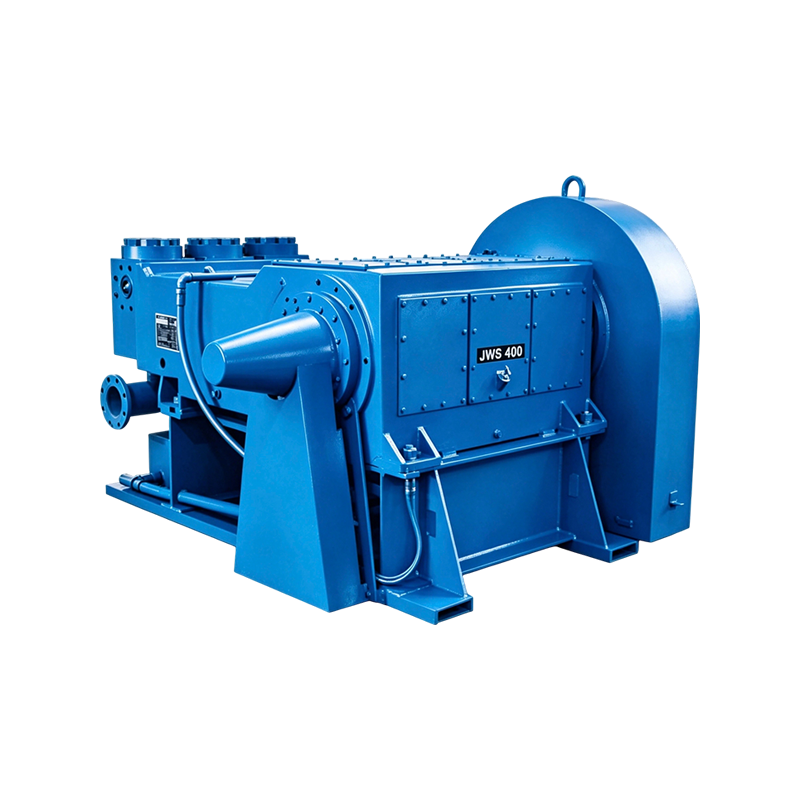
JWS400 Horizontal Triplex High-Pressure Drilling Mud Pump
-
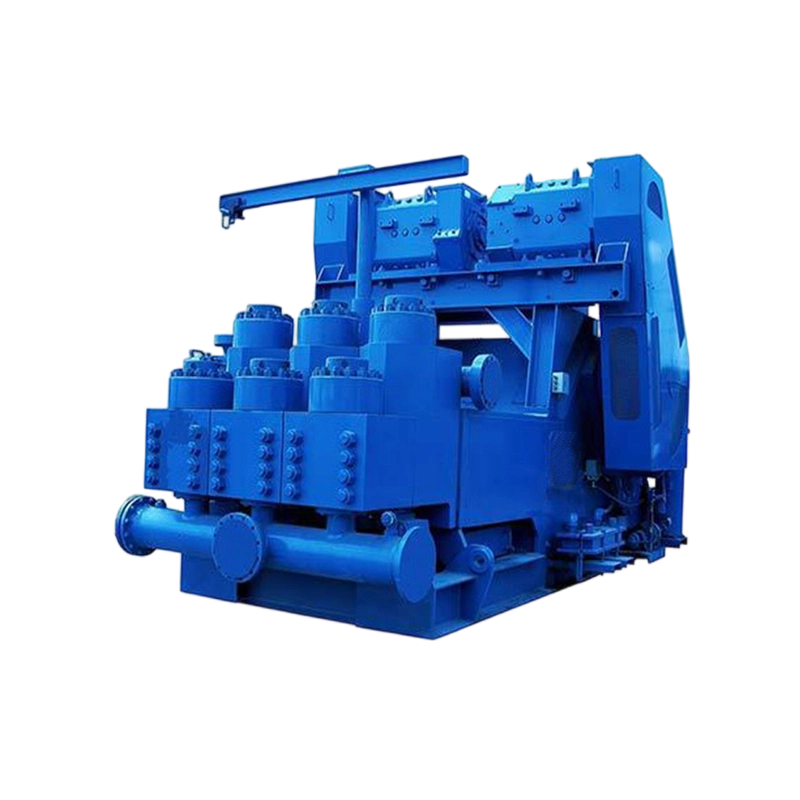
High Pressure P Series Mud Pump for Oilfield Circulation System
-
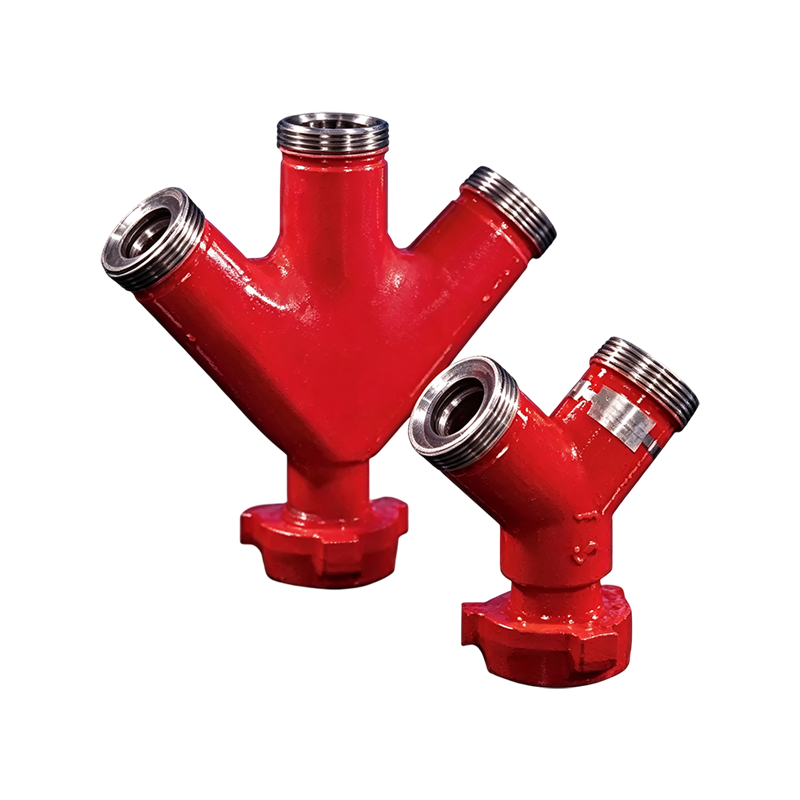
High-Pressure Integral Y-Type Tee Fittings for Oilfield Manifolds
-
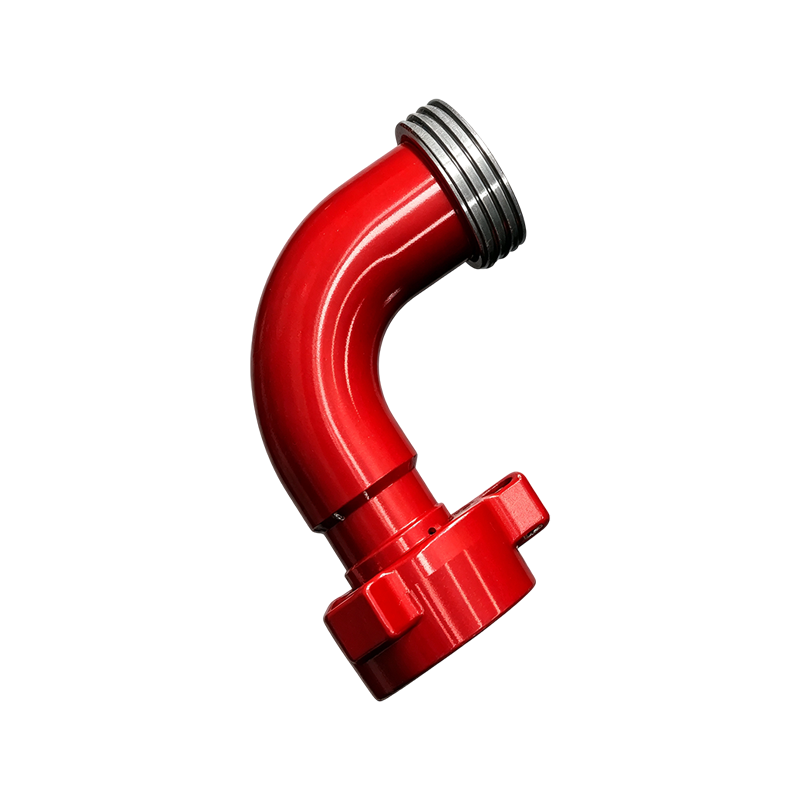
2" to 3" High-Pressure Integral Long Radius 90° Elbow Joint
News
-
-
Ask a field supervisor what puts a triplex pump on the ground, and the answer almost always points to the fluid end. A plunger washes out, packing starts weeping, a valve seat stops sealing, and a sm...
READ MORE -
Why Fluid End Condition Determines Triplex Pump Uptime On any well service location, the pressure-containing components inside a fluid end absorb more cyclic stress than almost any other part of the ...
READ MORE -
Understanding the Power End in a Triplex Well Service Pump The power end is the mechanical core of any triplex well service pump. It is the assembly responsible for converting rotational input from ...
READ MORE
Get in Touch
Your email address will not be published.
Required fields are marked *
contact us
Have a project in mind?
Contact with us
We are happy to answer your questions. Please fill out this form
and one of our professional team will get back to you as soon as possible.

-
Company AddressRoom 2112, Wanxi Jingyuan Building 10, Jichuan Subdistrict, west of Wanxi South Road and north of Diefeng East Road, Xuanzhou District, Xuancheng City, Anhui Province
-
Tel:+86-13063235523
-
E-mail:Exwell.sales@chinafluidendparts.com
Exwell.Petro@chinafluidendparts.com
Exwell.Director@chinafluidendparts.com
Exwell@chinafluidendparts.com
Copyright © Anhui Exwell New Energy Technology Co., Ltd. All Rights Reserved.
OEM High Pressure Drilling Equipment Suppliers
